Interview with Debbie Hutchison: Marketing for Small Engineering Companies
28 September 2023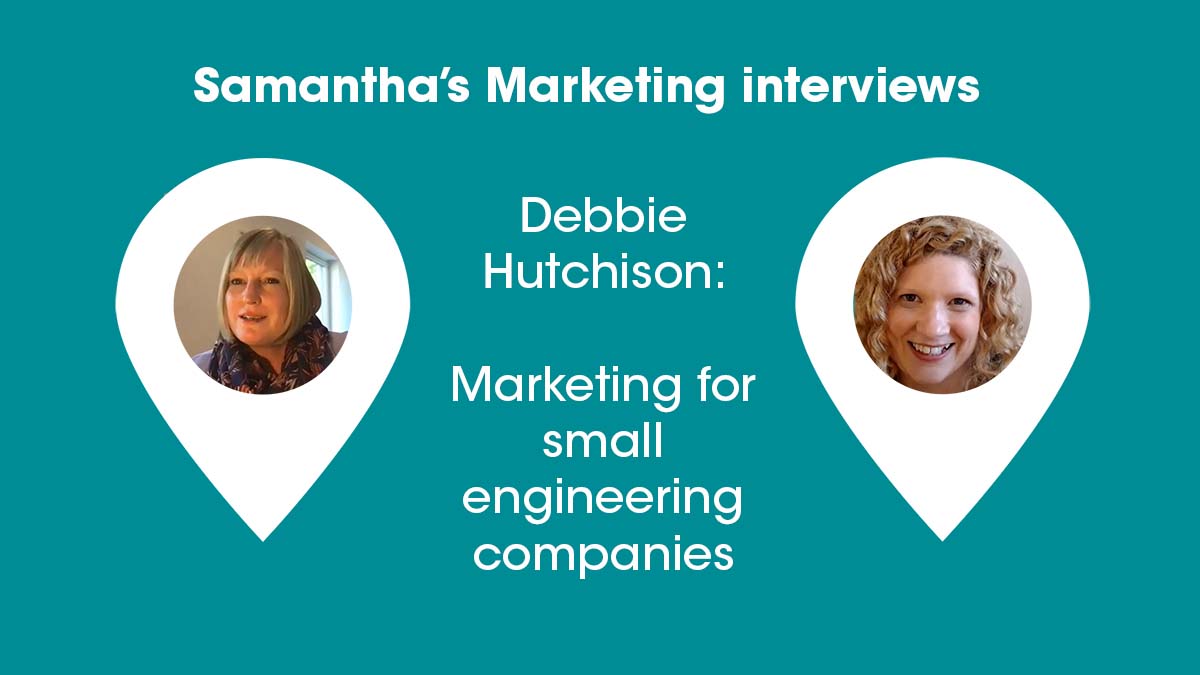
All businesses need to spend their budget wisely. This is especially true for small engineering firms. In Samantha’s latest expert interview, Debbie Hutchison discusses all things marketing for small engineering companies and shares insights from her vast engineering marketing experience. Where to start? What tools and methods are the most useful? What are the red flags that you might want to watch out for when engaging a marketer? Don’t miss out on Debbie's brilliant tips!
Debbie's links:
Other links:
Watch the video here or read the transcript below if you prefer.
Samantha Tonge: Hi, it's me again, Samantha Tonge, Labrakita Marketing. Here, with another expert to interview. Today, it's Debbie Hutchison. And we're going to be talking about engineering strategy for small businesses. So, Debbie, can you introduce yourself, please?
Debbie Hutchison: Hi, Samantha. Good to see you again. Yeah, I'm Debbie Hutchison from Griffin Perth.
Samantha: Wow. Short introduction. You're also a fellow marketing expert.
Debbie: Yes, yes. So, you and I have met a few times over the years now. And I'm working with a variety of businesses, mostly in the SME category, predominantly in Tayside. I'm on the Business Gateway Expert Help scheme, which is a great variety of work where I get to see lots of different businesses. But probably my most notable career highlight was with the engineering firm, Merlin ERD, because we won a couple of Queen's Awards a few years ago for international trade. And you know, that was a really interesting entrepreneurial journey, watching a small company just pick up its skirt, as it were, and run. And we were a really profitable, really successful company in the extended-reach drilling space. And so those were really interesting times. Yeah.
Samantha: Yeah. It's great that you've got a perspective outside of engineering, as well as a good understanding of engineering marketing or marketing for engineering companies.
Debbie: Yeah, because I think that's the thing. There are some general principles for marketing anything, aren’t there?
Samantha: Yeah.
Debbie: But equally, marketing for engineering companies poses its own particular challenges. For example, I used to have some interesting chats with our engineers where they were saying: "We've got nothing that we can say about this client project." And I'm like: "But we have to communicate the amazing work we're doing for clients." Getting people to see things through a marketing lens can be quite tricky, especially with larger teams of very technical people. But equally, there are some brilliant ways to connect and network. Back then, they were doing things like a Friday Haggler on LinkedIn, which was just a really nice way of engaging technically-minded people. It was in our space, and really, it was all to do with our positioning as the experts in extended-reach drilling. And it was something that they could get into, you know: "Oh, yeah. Let's get a great one for the Haggler this week."
Samantha: Yes, and I think establishing yourself as the expert in your area and building that credibility is really important across the board, especially with engineering companies.
Debbie: Yes. No, it was a good way to do it because once they were on LinkedIn and they could see how that worked, they began to feel less scared or guarded about sharing anything like that.
Samantha: Yeah. Brilliant. So yeah, we’re talking about smaller engineering firms in particular and their marketing strategy, which I think is something that's often missed. They know they need to do marketing, but they tend to skip to the tactics right away. By that, I mean the tactical work, which in marketing terminology means the specific actions you take. So it might be social media, building a new website, or whatever it is. But I think Debbie and I are on the same page about this: You've got a smaller budget, so you need to make sure that you're spending it in the right places. That is why it's so important to get that strategy right in the first place.
Debbie: Absolutely.
Samantha: So, where do you start if you're looking at the strategy for an engineering business?
Debbie: Yeah. I'm so glad that we are on the same page that strategy must come first because, I mean, even just there, I was getting all excited about a little tactic. But yeah, let's go back. Where do I start? I normally begin with the SWOT analysis of the business, classic marketing: strengths, weaknesses, opportunities, and threats. We are looking at that internal dimension, and externally, particularly in the business that I was in, in engineering, you know, at the whole sort of carbon issue. We were very much in the oil and gas space, but the oil and gas space was changing. And so, leading from the SWOT analysis is your PESTLE. The PESTLE starts with analysing the political context: significant changes in the governments and legislation. This is hugely significant for certain sectors. Then, the economic situation within that. Social trends, maybe not so much. But you know, obviously, it has to be something because we were getting younger engineers coming in.
Samantha: Yeah, that's the thing. Social trends are often more relevant from an employer branding point of view, but you still need to think about it. Yes.
Debbie: Absolutely. And it's got consequences for marketing because the managers were of an older mindset, saying: "Go and make some calls." And the younger people would be coming in and going: "But we don't really like using the phone, and the people at the other end don't want to get phone calls." And we're like: "Well..." So, it was almost a generational thing which came into that kind of social category.
Then you’ve got technology. A lot of consumers and, well, a lot of us, as consumers, are using tech a lot more in our lives. And in our jobs, of course, where we might be looking for suppliers to create an app or a really amazing website. So being up-to-date with the technology is also essential. We were having a quick chat there about artificial intelligence. Understanding how that relates to your engineering business and your sector is important. And this context stuff, in my book, is a real priority actually.
Then there is legal as well. And finally, that environmental and ethical part, which, again, for oil and gas was hugely important and can be a massive PR tool.
Then we get back onto the tactic stuff. Understanding what consumers are saying, what your competitors are doing, so just benchmarking what competitors are doing on these different items, environmental policy, this kind of thing. And I think customer profiling is probably at the heart of what we do as marketers. So that's got to be in there now: Who's buying from us now? What do they want? Are they our ideal customers? Do we want to move up a bracket and lose some of the lower-value ones or not? And that's a great chance when you're doing this "Where are we at now?" first, to say: What is our USP?
Samantha: Yeah.
Debbie: And it may have changed because the market's changed.
Samantha: Everyone should be looking at that and what their brand proposition currently is because the world has changed for everyone. Yes.
Debbie: Yeah. All you need is a couple of new competitors to come in or an overseas company that maybe hasn't been active in your market, and suddenly, your USP is meaningless now because you're not the only one, you know, making rocket spindles anymore. So, there's quite a lot of desk research in that first piece. But the great thing is, it's an opportunity to collaborate with colleagues if you're lucky enough to have them, suppliers even, and customers. You can profile them, maybe interview them like this and find out why they're buying from you. But yeah, it's a great chance to do some market research.
Samantha: You know, I often run workshops where they have different people from different parts of the business in. I find it amazing that it's not unusual for the founder of the business or the Managing Director not to realise just how much knowledge there is in the business.
Debbie: Really?
Samantha: The other thing that never ceases to amaze me is that they're in that meeting, but they're learning new things about their customers and what their current issues are. And sometimes they even say things like: "Oh, I didn't know the product did that!"
Debbie: No. And just that chance, even just to brainstorm some of this stuff as a group. At Merlin, we were getting quite a lot of work in Spanish-speaking countries, so we employed a native Spanish speaker. He was not our most senior engineer on the technical side, but obviously, you know, well-qualified, well-versed in it. But he also brought a load of cultural knowledge about selling in South America, for example. That was just really key. And I probably hadn’t really thought about that, and underestimated the value of his experience. I was very much thinking how he’d fit in with us. You know, in his induction, it was all about us telling him, rather than listening to what he knew. Of course, he had loads of insight into running courses over there, technical training courses, trade shows, all these kinds of things. There was a lot of wealth there. So, I think, gathering all that in and feeling really secure about: "Right. We know where we're at, and then we're setting our sights on where we want to go." Which is all the good stuff. You and I know this: Mission. Vision. Values.
Samantha: Yes.
Debbie: But you know, you can't underestimate it. And the older I get, the more I see that, actually, it all comes down to the values. They're such a guide.
Samantha: Yes.
Debbie: When you get the tough times, or the "What should we do about X?", if you’ve got set values to go back to and guide your decision making, actually, everything flows from that. And I probably used to feel it was a bit more of a tick box. But I think with what we've been through with COVID, many of us had a real reprioritisation of life. I'm getting deep here. It is Friday afternoon as we are recording this, after all. But you know, it comes down to your values, and it is even tied up with that environmental and ethical piece. And this might not always be possible when you're an employee; I understand, you know, you need the job. So, the fact that you know, whatever you're in, in mining, or... But somewhere in your company's mission, vision and values, if you can gel with those, you'll find that it almost energises you. To get out and sell it, or whatever your job is.
Samantha: Absolutely, absolutely. And I think engineering firms, especially smaller engineering firms, are really struggling to get the talent they need. If you've got those values that fit with potential employees, that's going to make life a lot easier when recruiting. Especially if you tell people about it. Because I've worked with quite a few firms that are doing such amazing things, but they're not telling anyone. So, just mentioning that now: Just make sure that you tell people.
Debbie: Yeah, I know. No, absolutely. You're dead right. I think, particularly in specialist, niche businesses, to get that great pool of people, you really need not only to sell yourself but to be thinking ahead in that vision and say: "Come and join us; we are going to revolutionise whatever sector it is." And that's really powerful because people want to belong. All this "find your tribe"-stuff isn't just to do with hanging out on social media in hobby groups; it also translates to career choices. And people will make decisions about where they want to put their time and energy.
And then it’s one of the classics again: the SMART objectives. And that is hard. I especially find it hard to push companies, particularly smaller companies, to get specific and commit to numbers. I often say: "Right, you know, we've got to get the numbers written down, so we know what we're doing." Because, of course, it makes it easier to measure. And then we know whether we should turn things off or turn up the volume, turn up the heat. So, it's an absolute given that you should do this.
Samantha: Absolutely.
Debbie: But I've seen people just say: "Oh, it's all too hard," you know, "I don't want to commit this."
Samantha: But if you don't write it down, it's not going to happen. If you don't have a target, you're never going to reach it. Whereas if you write it down, chances are you will.
Debbie: Yeah, yeah. And you can communicate it and get other people on board. So, I think that's us. We've done all this sort of analysis, where we are now, we're looking ahead, we know where we want to go, and we've got our ducks in a row, galvanised the team if we are fortunate enough to have one, or we are putting ourselves in the best place to recruit talent. And then, with all that, I think you're looking at your strategy.
Often, I find it's either targeting: “We are going to target the heck out of our market by getting really clear on some distinct groups within it” or depending on the nature of the beast because, in some highly competitive markets, everyone's targeting these same niches. But that whole strategy of positioning yourself as the expert can really pay dividends as well. You are the go-to for whatever, a kind of technical design or technique, tool, product or service. I've seen different people come out of their strategy the harder, or some just kind of do the old general: "Let's just go out and see who'll buy our stuff."
But just spending some time getting a good strategy and getting clear on it is invaluable. And then, from there, you can start planning a whole load of tactics that will just be delegated. You will put everybody's names against the actions, and off we go with this plan. Then we can measure, at various times, to see how it's performing and whether you need a sort of redraft or a refinement.
Samantha: Yeah. “What's working? What's not working?”
Debbie: Yes. So, I mean, that's the kind of plan I would recommend. I don't know about you, do you do something similar?
Samantha: Yeah, it's pretty much identical.
Debbie: Excellent. That's good! That means it's right.
Samantha: Yeah. I use PR Smith's SOSTAC model. The first S stands for Situation, which is where you started.
Debbie: Yes!
Samantha: Then Objectives, Strategy, Tactics, Action, i.e., who's doing what. And finally, Control, which is the: “What's working? What's not working?” when you plan on looking at what's happening against objectives, etc.
Debbie: Yeah, I was so happy when I heard him speak at an elevator event. I had been looking for a framework that fitted this. And then, you know, he explained this, and I thought: “That's totally it. It is what would work for almost anything.”
To the point of, you know, people are often: "Oh, we need to do marketing. So that means we need to get straight into social media, or we need to go and get our website changed." Everybody always wants to change. And just like we've been chatting about, it's just: "Let's take a pause." Before we throw the whole lot out, let's do all the good stuff: the reflection, the research, the work. And then get into things. I also find, that with the tactics, everyone gets excited about promotion. It seems everyone's got an opinion about promotion. But I often start by looking at the product or the service and asking: "What can we refine?" I mean, it could be completely changed, but normally, it just needs refinements to make it better gel with that target market.
Samantha: Yeah, once you've done all that research and target market and you look at the product and service, if it doesn't quite match, you need to do something.
Debbie: And it becomes blindingly obvious sometimes, but people haven't seen it. I mean, with the oil and gas business I was in, you know, selling training courses, we very much had benchmarked to competitors, for example, for the duration. You know, if they ran a five-day course, we did a five-day course; if they did a three-day course, we did a three-day course. But actually, when you then asked clients what they really want, some of them said: "You know, we'd really love a one day; I know we can't go deep, but maybe for some senior managers, it would be great." And then you think, actually, that makes a whole lot of sense. And effectively, it's another product we can sell.
Samantha: And it's a differentiation from your competitors.
Debbie: Absolutely, and it's like: “Why has nobody thought of this before?” And even just looking at the nuts and bolts of your product or service: “Can you pack more branding in there? Can you put some extra value in there?” Which kind of touches on the pricing. But also, just so that you've got the best product or service, or if your strategy is more low-cost, no frills, which is perfectly valid. “How does the product or service exude that?” I mean, because some people have not matched these things up; they just had the same product forever. And they're like: "No, no, we want this new strategy." And it's like: "Okay. Well, we're going to have to take some stuff out. If it's going to be a new..."
Samantha: Yeah, absolutely. Absolutely. I feel I ought to jump in here for anyone who is a little bit confused and thinks marketing is all about promotion. Just to explain, marketing, in the broader sense, we've got the original four tactics: Product, Price, Place and Promotion. But there are three further Ps, which are People, Process and Physical evidence. And whenever I get to physical evidence, I think: "They must've been trying so hard to keep it Ps."
Debbie: I know. It sounds a wee bit CSI when we get onto physical evidence, but we love our acronyms in marketing. It's a great prompter though, isn't it? Because it's such a big topic. When you’re sitting there and people are like: "Oh, we need to do something." And we're like: "Well, let's think about it rationally, let's focus on the product."
Samantha: And I find that pricing strategy is something that's often skipped as well, or they don't have enough cooperation during its development. Even in big companies, finance is the only one responsible for pricing, and they don't necessarily consult the marketing department. Finance says: “We want to make this margin, and that's the end of it.” But pricing is a communicator as much as anything else. Sometimes, you sell less because you're not charging enough.
Debbie: Yes. It could be saying all sorts of things about your business; it could be saying you're distressed or that you don't value your work, particularly if your business is service-based. And we'll put the gender thing in there. You know, I do find some of the female-led businesses and the businesswomen I know have a tendency to think: "Oh, we can't charge any higher!" Exactly when we should be pushing that price.
Samantha: Yeah.
Debbie: And that's perhaps a confidence thing that we need to get over. But yeah, pricing is really interesting. I’ve read the Value-Based Fees book; I don’t know if you know it. That's an interesting one. It advises going in with your: "This is what we're bringing to your project; give us X per cent." It is very interesting to look at the outcomes of the different pricing strategies. But, on the whole, I think people need to be really mindful because it's a big lever in terms of your timing. If you've got to make some money quickly, you might want to run a promotion on a certain price point. I mean, you'll literally see a cause and effect with that, whereas a lot of the other things take longer to come to fruition. You know, a promotion may take a while to work if it's a more brand-positioning thing.
Samantha: Yes, I think that's another thing. We were talking about objectives earlier. I think one thing that is so often missed is thinking about the long-term objectives, as well as the short-term objectives. You need to make sure that you've got both. And, you know, your long-term objectives should fit in with your vision. And yes, it is more about brand awareness. It is important because a lot of engineering firms, depending on what they do, but for some of them, it's something that they may only need once in 10 years. But you want them to be thinking of your brand when that happens. And you don't know when that's going to happen.
Debbie: That's right. And the evolution of your brand is going to change. So, if you're a new entrant to the market, nobody knows you; you may go in at a lower price point because you kind of have to prove your worth; you're not the established player. So, you might have to be a bit more agile on prices to win the work. But of course, then, as you become the kind of incumbent supplier, you've got to guard that space. So, it really is tactics. It sounds like a game of chess when we're talking about it.
But yeah, it's been interesting. I think when companies I've worked with come to that realisation: “Oh, actually, now we're the ones who are seen as established.” And here's this new person who might have worked for you, but they've gone off. They were a consultant. Now they've got their own thing. But can they actually hold their own?
Samantha: Yes. That's often the case.
Debbie: And this is actually a good segue into what arguably sounds the dullest of the Ps of marketing: Process. But along with values, it is kind of the crux in the business space because if you don't have standard operating procedures or at least clearly defined processes, you won't scale.
Samantha: Yes.
Debbie: Well, at least you'll find it harder to scale anything, that delivery of the quality, service, and consistency that you need to build a brand. And I think that people want to skip that. And they're like: "Yeah, we'll just hire somebody to do this." It's like: "Well, will they do it like you?" "Oh, I don't know. Does it matter?" "Well, possibly, yes. Because your brand is on the line, and your brand is a promise." I get quite fired up about this.
Samantha: Yes. And I think, again, just to jump in for anyone who's maybe not so familiar with marketing and our terminology: your brand is the core of who you are and what you do. It's not just your logo, your colours, or your font. It's who you are and what you represent to the customers.
Debbie: Yeah, the way you do business. When I started my career, I worked in the larger corporates in the motor industry, and they spent a lot of money on advertising campaigns for TV consumers. But, you know, if then you have a bad experience at your local dealer, who carries the same logo, but it's a completely different experience to the aspirational TV face of the brand, you get this disconnect. And I mean, I've already learned, as a junior marketer, that we're going for a seamless experience. That is what you want. And I think small companies can do well in this because they can control the process and be on it. They can see, sometimes literally, their team delivering a service or speaking to customers. But you know, it also works quite well with a sort of technical brain, if I might say that, the process-led, the kind of engineering mind can lend itself really well to be in this kind of protocol. It's a bit repetitive, but you know, in a good way because that is building layer upon layer of trust with the customer. So that can be actually, arguably, the most valuable asset you have: to build up this book of processes. That is your secret sauce, your customer advantage.
Samantha: And it means, as you grow, you don't lose track.
Debbie: Yes.
Samantha: You see that quite a lot; a company grows really fast, and then they're really disorganised because they haven't built that foundation of the processes.
Debbie: And if you're going to different sites, or different markets, different countries, you really need this stuff. Unless you land really lucky with just getting some amazing staff members who, by osmosis, seem to know how you do it your way. Also, having been through the journey of employee ownership, when you come to exit your business, having this is gold dust because you are effectively ensuring the business can survive without the founders.
Samantha: Absolutely. Yeah.
Debbie: I think for engineering businesses, that's pretty important because you need one eye on the future and a possible exit.
Samantha: Yeah. No founder or managing director is gonna be there forever.
Debbie: Yeah. So, yeah, processes, you know, people go: "Mmh…", but actually, get that right, and you've built something that's probably scalable if the market conditions are right. And then: "Woohoo!"
Samantha: I think we've touched on people already, how key that is.
Debbie: I know! I put a LinkedIn post up the other day because I'd been at a big concert. And I had a post to the lead singer because he was wearing the merchandise.
Samantha: Ah, yes. I remember seeing that.
Debbie: You know what we're like, marketers, you can't switch us off. But I was like: "That's brilliant! He's wearing that," and I mean, we'd just bought T-shirts for the other people I was with, because that's what you do at a Muse gig: get a T-shirt. But the point of that was that your people can literally wear your brand. And I mean, a lot of us maybe have worked in factory settings or whatever. But even thinking outwith that: "Is there stuff...? Can you have car stickers? Would you have...?" And it kind of touches on that physical P as well. But you know: “When you're getting team photos taken, what other embodiments of the brand have you got? A mascot? Have you got something fun? Have you got some promotional flags?” I mean, we are straying away from people, but it's almost, you know, they're an asset; they need to have the right materials, the right tools. And you can get the team to work for you quite well.
Samantha: And they need to understand what the brand is. And they need to understand the values, the brand proposition and mission as well. I mean, there's a lot of research out there that brand-focused companies, in the true sense of the phrase: “brand companies”, where all the people understand what the brand is and where they personally fit into that, are much more profitable and grow faster than other businesses.
Debbie: And I think it's great for smaller businesses. Talking about Offshore Europe, the big oil and gas show as it was, anyway.
Samantha: Yeah, I remember those days.
Debbie: All companies wanted to be there for the credibility factor. But the stand costs alone, you know, buying stand space and then putting something on it was really expensive. So, the first year, our brand strategy was that we were disruptors, because we were in quite an established engineering space. So, we took a couple of students to Offshore Europe, and because the company was called Merlin, we dressed them as wizards. These students then walked around Offshore Europe, handing out some branded pens and notepads as people were going into conference slots. It worked pretty well for a kind of low-cost PR stunt. That's what it was.
And we also did, because Ian, the founder, is a flier, he flew his plane over Offshore Europe, and we managed to get onto STV by just a bit of a brass neck walk-up to the press office.
Samantha: Brilliant!
Debbie: These things were a little bit out of the box, but for a small company, these kinds of tactics are really worth thinking about. “How can we do something different?”
Samantha: I think a lot of engineering companies feel that because they need to build credibility, they always have to be really, really serious and can't involve humour. And that's not true at all!
Debbie: Absolutely.
Samantha: People don't think less of you just because you're amusing or because you've done something different or interesting. Quite the opposite. They'll remember you because of that.
Debbie: I know. Recently, I was working with a satellite company, and I couldn't help but look outside and just see all these big white dishes. And I know that now you can vinyl wrap anything in brand colours, so I'm like: "Can't we do something?" But I'll leave that one pending if there are any satellite companies watching, but, you know, these kinds of things can be seen by people in the company as a bit gimmicky. Then again, we want to get people to stop and look amidst their busy lives. And I think although we're at work, for example, in that engineering role, we're also consumers. That boundary between work and play/leisure has shifted so much. It's a lot more fluid now. And I think we got to give ourselves permission to think more like a consumer at work and think: "Well, actually, if I saw a spaceship or a car that's been branded, that's covered in grass, because we've got a revolutionary lawn outer, or just stuff that's really like: "Wow." We're trying to stop people and get them to go: "Notice me!", often as marketers. And that's increasingly hard because of the volume of information and activity.
Samantha: Yes, and I think that's a really important point as well, because another thing that I come across sometimes, you know, talking to the founder of the business, who are engineers themselves, and they think that every technical detail needs to be included in every piece of communication. Because: "Oh, well, my customers are engineers", which is often the case with engineering companies. They are often dealing with other engineers, but those engineers are really busy and have all sorts of other engineering products and services they have to think about on a day-to-day basis. Plus, they are bombarded with messages. You need to grab their attention before they will look at those technical details.
Debbie: Absolutely. Reach out to them on a more human level with a bit of humour, or even something that is touching the emotional side. If your product has got environmental benefits, use it. Or maybe just presenting them with the happy smiley face of somebody who's a recipient of a grant or something through your charitable arm. There are all these different ways to engage. But yeah, I think you're right; we can be guilty of being very like: "Oh, well, it's technical, and we have to be serious. And that's a bit out there..." But try it!
Samantha: Yeah. Engage with people on an emotional level; like you say, they're humans. And yes, if they engage on an emotional level with your communications, they're going to remember you better and be more inclined to... They'll almost feel like they know you, because they've engaged on that level, so they'll feel more comfortable dealing with you.
Debbie: Right. And I think, going back to the sort of general principles of marketing, you know, some of this stuff is removing obstacles.
Samantha: Yes.
Debbie: "Oh, I don't know them", or "Not sure, are they a local company? Oh, I don't know." So, if we remove obstacles, like, you know, because we've presented our local knowledge or a fun fact, then it increases that familiarity, that trust. And these are very much what a customer needs to make a decision. They're looking at this company, going: "Hm, I don't know." So, yeah, plenty of good, sort of soft marketing tactics in that, that we shouldn't overlook.
Samantha: Absolutely. And I think that was a brilliant point, what you just said about removing barriers. Because I think small companies are in a really good position to be agile and make it easier to deal with them. Big companies are really good at putting barriers in.
Debbie: I can imagine. Yeah.
Samantha: You have to fill out all these forms, and you have to spend X amount to be a direct customer, otherwise: "You can deal with our distributors. We don't want to know you", you know. Whereas in a small company, you are in a better position to take all those barriers down in every sense within your processes, as you said, within your marketing communications, with everything.
Debbie: Exactly. And if you spot a trend or something's not working with your product or service, you could be on that very quickly and communicating it. I think people are scared of PR. They don't want to go on the TV, they don't want to go on the radio, whatever. When, actually, it's quite good fun. And if you've done something that's going to really make your product or service better, why wouldn't you want to share it? So, if you're putting it on social media rather than going to other media channels, I think the key there is freedom within a framework. You want to have checks and balances, so you don't have people just jumping on social media under your company name with any old stuff. You know, you want to make sure that it's spelt right. I'm a bit old-school on that front: Make sure it's right. Again, that's back to values, like, if you've nailed your tone because you know that your brand is professional yet engaging, and you want to come over as really skilled but also very human. All of these things have to do with branding. And like you say, it's not just your logo; it's your tone of voice. And getting that stuff nailed early on, particularly if you're a startup, you know, just giving a little bit of thought to your branding is very important. It’s more than just a logo and colours.
Samantha: Yes. Yeah, all those little icons as well that you can use. There'll be something within your logo that you can use so that people go: "Oh, that's them." Going back to emotions, as soon as they see something, and it reminds them of you, it brings up those emotions they feel about you as well. And those emotions are hopefully positive; otherwise, it doesn't work.
Debbie: The little flame emoji. I'm never quite sure how to take that one. Does that mean I'm on fire? Or have I burnt my chances?
Samantha: But yeah, absolutely. The tone of voice is really, really important. Another thing that is worth mentioning is scheduling. Scheduling tools can make smaller businesses' lives easier. You can give access to various people who can then put stuff on it, but you want to have one person checking it, editing it, and just making sure it's correct and has the right tone of voice.
Debbie: Yeah. And just touching on that, we were chatting about AI a little bit in there, and I mean, I'm no expert, but just seeing some of the uses of AI, particularly for content marketing: so writing blogs, or longer form articles, website content... I mean, you do want somebody to edit it, somebody who knows...
Samantha: Yes, going back to that tone of voice, you have to make sure that it is right.
Debbie: Yeah, make sure it sounds like you, and it's not just drivel. But equally, I think it can be useful for small businesses that don’t have a full-time marketing person and don't have the time to sit with a blank sheet of paper or a blank screen, going: "Right, what am I going to write about?" So, I've been using ChatGPT a little bit for precisely that. And I'm really...
Samantha: It's a great prompt if you're stumped for ideas.
Debbie: That's it. Exactly. And for spotting trending topics. You know, for going in and seeing what's happening, what's the latest thing. And I had a little tip the other day: "If you use Bing as your search engine, BingChat is the latest version of ChatGPT, which is free if you use Bing, but it's not free if you use ChatGPT 4.” There you go. Great saving tip. Yeah, so I got quite a lot of different versions recommended to me. In fact, I even saw one called GPTBoss, where you have a whole load of virtual experts. But that's maybe a next step for me.
Samantha: And it is really important, again, just want to reiterate, don't just be lazy and use it for the content itself, on its own, and don't edit it. What if your competitors are using exactly the same AI? You'll all have identical blogs, and you won't be distinctive at all. So it is really, really important to use it in the right way.
Debbie: Yeah. Because the whole thing is… I mean, this is a rapidly evolving new technology, and I think we'll be seeing penalties for AI-generated content in some of the platforms. So, it's not an absolute silver bullet. Like anything, we need a bit of discretion and a bit of intelligence to take the good stuff out. But yeah, overall it is quite good. And also, the increasing use of…, I don't know the technical term, but the tools that will connect things. So, if you've got a customer relationship management system, you know, connecting that to your website...
Samantha: API.
Debbie: Yes, that's it. API.
Samantha: Some CRMs are actually part of marketing automation. Sometimes there's a subscription, but HubSpot is not the only one out there, I feel I should mention. If you don't have a budget for HubSpot, there is Active Campaign. It is quite a good one. And yes, it costs, but it saves you a lot of time, and time is money. And if you don't have the resources timewise, it's worth looking into these things.
Debbie: Absolutely. And I think it's natural, again, it's sort of an evolution. Depending on your situation, for example, if you're a startup, you will be totally fine to start with an Excel spreadsheet of your customers. The point is the process, really, of recording it. I mean, as long as you're doing that, however you're keeping the data, at a later point, it can get swept up into something more sophisticated.
Samantha: Yeah, absolutely.
Debbie: Not just, you know, being out there, doing business left, right and centre, and not getting any sort of records or any good data, because the thing is, if you don’t have the data, you are missing out. Again, back to increasing automation, as there's a lot you can do. There are programmes out there now that find all the trends in your customers that you might not see.
Samantha: Yeah, yeah.
Debbie: I mean, that's quite exciting. So, there are loads of opportunities for the future, but I guess where we're at now… We, you and I, are clearly vital to be directing the traffic here. But no, I think it's a really exciting time, actually. As I was saying, I think, post-COVID, a lot of us, in our business life, have kind of reevaluated where we're at. Brands need to recognise that their customer base may have changed in the way they want to do business, and it even gives rise to new products and services. It just feels like a big refresh is coming. And that's exciting.
Samantha: Yes. I think even those tactics have changed in a lot of ways. It varies from industry to industry, but in some industries, they don't forward the phones; people are in home office, and you can't get them on the phone anymore. But then other industries are office-based; they’re there, and they are available. So, that's again something that comes back to knowing your customer and understanding their preferences.
Then there’s direct mail. Don't discount direct mail because it's old-fashioned. Especially lumpy mail, people love it now. People get so little post now that they get excited when they get something, anything, especially if it's not a bill.
Debbie: That's true actually. And I've seen some great tactics over the years. I'm quite big on paper craft as a hobby, and I saw a brilliant piece of direct mail from an architecture firm once. It was a little house that was flat in the envelope, but when you opened it, the house just popped up. And it was just a simple piece of paper engineering, but what an impact! Because you're like: "Woah, that's clever! Who are these guys?!" So no, dead right. I mean, it's all about context. Because that might not have worked ten or five years ago because you were just swamped with junk mail. But now that it's a bit more special…
Samantha: Yeah. Everyone switched to email because it's so cheap. But now, everyone's swarmed with emails. So, the click-through rates are plummeting. I certainly don't have time to look at every email I get.
Debbie: There's too much. We're saturated. So no, it's a good point. “How do you achieve that standout for your particular market?” And it could be something as simple as a piece of promotional, like a ruler or something, as long as they find it actually handy. Because you want them to go: "Oh, I really need that!"
Samantha: Yeah, yeah. And if you know your market, you will know that it's something that's really useful to them. It could be gauges, or it could be, you know, anything.
Debbie: Tally books, for example. Things that are essential for a particular job or that are of a particular size to go in a particular pocket, like on a boiler suit on an oil rig. I've spent a lot of time looking at tally books back in the day.
Samantha: Yes. And then, if they use it, they keep it on them; they keep being reminded of your brand.
Debbie: Absolutely. A couple of the clients I'm working with are actually at that stage just now, and I'm quite looking forward to looking at promotional items for them. And, you know, just what's current, what's new, because everything from like wildflower seeds pressed into paper, that can sort of subtly put an environmental message in your brand, the list is endless. So it doesn't all just have to be back to stress balls and, you know, the pen. There are so many options.
Samantha: Way, way, way back when I was working, very briefly, for an agency before I went client-side and set up my own agency, they did a really good campaign. Unfortunately, the contact list was a problem, because there wasn't an up-to-date contact list, but I still thought that the campaign was really good. The creative director sent out: "Here's some spare socks because we're about to knock your socks off with your next campaign."
Debbie: That's quite good. I do like a bit of humour and a bit of a pun sort of thing going on.
Samantha: Yeah, he just bought a whole bunch of socks from Tesco. They're useful, but they probably went in the bin.
Debbie: Probably some of them did. But I still keep... I mean, this was a pen that was designed because they were doing extended-reach drilling, and it felt to me like a sort of spiral. I don't know, you probably can't see it very well. But we were trying to get animations made of kind of spirals going around. So, there's always something that you think: "Oh, that's kind of…” That's back to that piece about your brand and how you can take it through some items, even the usual office essentials.
Samantha: But you can't do any of that if you don't do the foundations: looking at the situation, really doing all that research on your customers and really understanding them, your target market, the wider environment, etc. So yeah.
Debbie: I remember a great debate once where a marketing agency had told us that we should make a really nice coffee table book for senior managers in the big, established oil and gas companies that we were trying to pitch to. And, you know, there was the early discussion about: "These guys are really busy. And when they've got time off, are they gonna sit there with a beautiful book of black and white pictures of the oil field?" "Nah." You know what I mean? And that was a kind of not really knowing your target audience. You know, a coffee table book might be a beautiful thing for photographers and, you know, people with time, I don't know. But the kind of busy executive we were after was probably not someone who needed it. After he'd done his 12 hours in the office or something, he was probably going home to get stuck in with the family. And this idea of sitting around, gazing at pictures of nodding donkeys, was something that just didn't fit. And so, it was quite an interesting lesson of why you should know your customer, know what they would find fun, or interesting or standout. In the end, we got quality multi-tools engraved. And because that was just kind of a handy thing that they might actually keep on them, and probably the graving is cheaper than...
Samantha: Yeah, probably cheaper as well, yeah. And I think, talking about that. I've had to pick up the pieces for clients who've been dealing with a marketer who was not a marketer. If anyone comes to you saying they're a marketer, they can do your marketing strategy for you, and they jump to tactics: Run the other way!
Debbie: That's a good point because there's a lot of people out there purporting to be, you know, the greatest thing since sliced bread. I mean, there's a set of skills in the digital space, you know, particularly digital advertising. That is a great skill set, but actually a very tight one because these people are doing that every day. So, you may need those kinds of skills, but that doesn't mean that they are the best person to advise on something like promotional, or a PR strategy. I mean, I'm a general marketer, but...
Samantha: It's not unusual for me to actually be referred clients from a specialist because they've gone to them, and the specialist asked: "Okay, so where does this fit in with your strategy?" And they're like: "My what?"
Debbie: Yeah. The: "Oh, I thought this was all we had to do." And it's like: "Hm, okay. It's not really going to bring in the results you want. If we're just doing...” But equally, I mean, I've got a network of specialist people. And I'm sure you have as well.
Samantha: Absolutely.
Debbie: I can write a good press release, but if we're trying to get really sustained coverage over a six-month period, and it's in a particular paper, I might think: "Hm, you know, I know somebody who's got great relationships there. It's not my area", or whatever. So, I think that's good as well. We often have a team. Because it's a huge area, marketing.
Samantha: It is. Absolutely, and no one's truly a jack of all trades. I mean, I'm pretty good at copywriting and at social media. I'm used to working in small teams, where I had to do bits and bobs, but if it needs anything more complex, in terms of graphic design than a simple template for a social media post or something like that, I will put you in touch with a graphic designer. If you need a website, I will put you in touch with the right person, or right agency that fits you. Yeah. See, if anyone comes to you and says they can literally do everything themselves, question that.
Debbie: They're going to be pretty busy. Yeah. That was quite good. I think, we've touched on earlier, the SOSTAC thing about Control being the sort of final part of its marketing strategy. You've got a lot of different tactics going on over a certain amount of time. And I think it's important as well, for smaller firms, the realisation that you can't be going at everything all at once. I mean, there's a day-job servicing the customers. So, to be thinking that you can be hitting everything, you know, the website, the PR, direct mail campaigns, e-newsletters, "Oh, there's that trade show!" "Oh, have we done any networking?" is not realistic. And so, I'm pretty pragmatic when we look at what a client can do. But a lot of it, again, is about making it a process. So maybe it's once a month we have the big social media pow-wow. And we get that lined up for a month, or you do it weekly, whatever. But you then come back three months later, or your defined times, and you check: "Right, how did we get on with that?"
Samantha: And what the trends are over time, once you've got some time under the belt. Yeah.
Debbie: Yes. I mean, some of the things take a little while. Email newsletters, for example, can take a while until you see the value because it's a kind of touch point of your brand. They're like: "Oh, yeah, that's them." But then if they begin to feel that you deliver quality content: useful, relevant, and timely, then, you know, they won't unsubscribe, and they'll actually… may not look forward to receiving it, but they'll be like: "Oh, yes, it's you again. Oh, yeah, that's a good idea. That's a good tip", or... So, I think making sure that you're doing a bit of a control measurement obviously is key.
Samantha: And thinking about: "So, was this tactic to do with our long-term or short-term objectives?" And take a bit of a thought around that. Like you say, email, for example, takes a long time. Organic social media often takes quite a long time to have an impact as well. Organic, by the way, is the non-paid-for social media as opposed to the paid-for.
Debbie: No, I think that's a good point. And there's also a vanity thing with social media statistics. Everybody wants to think they're getting more followers. But of course, we know that the crux of that is essentially that it's a vanity stat in some respect.
Samantha: Yes. Who are your followers?
Debbie: Are they relevant? Are they even in your funnel as a prospect? We're looking for...
Samantha: And if they're not: Do you need to tweak your messaging?
Debbie: Exactly. And I think, again, smaller businesses can be a little bit more reactive to go: "Oh, great! You know, I've picked up all these great new followers." But just that: "Alright, hang on. That's great. I think. But let's have a look. And are they converting? Are they buying your product or service?" "No." "Are they inquiring?" "No." "Okay." And then it should be easier to sort of get in and fix it than it is for the multi-level corporate where: "Oh, we'll have to speak to marketing." So, yeah, you've got the dynamism, hopefully, to get in and see what's happening. But it can be really interesting how you almost can't understand why a certain post did well.
Samantha: Yes. I think that’s another thing. You shouldn’t look at it under the microscope. You have to look at trends over time because sometimes it's the luck of the draw; a particular person spotted it, and they've got a lot of connections, and that's why that particular post did really well.
Debbie: I mean, when the late Queen passed, a charity I work with, had a big sales drive on for tickets for a show, and, obviously, we had TV ads lined up for it. But then the news was dominated by the passing of the late Queen, so the TV ad, and well, nothing performed. But you have to take the context into account. Because if you had just looked at the facts, you'd think: "Oh, that's wrong." And it was like: "Well, no. It was the news agenda that caused it. Nobody was thinking about buying tickets when there was this shocking news." So, I think it's important, like you say, to look at trends over time because then you've got a bit of insight into: "Right, well, that actually is not a typical day when that happens. We've got no sales because something else was dominating."
Samantha: Yeah. With one of my clients, we had a really huge spike one day. And it was because of a post about a client who makes robots and people just like robots. That's all it was.
Debbie: Ah, yeah. So, everyone's like: "Oooh!" I know. And I mean, on that, there's some value to just being opportunistic. I suppose your mindset is important there. Because when you see something on, I don't know, EastEnders, or when you're watching the TV, and it brings up something that's relevant to your product or service, it's so good to have that spontaneity. Again, back to the sort of framework where you got to know whoever's posting it has not had four pints of lager while they're watching that show.
Samantha: And you really got to be genuinely relevant. Don't turn it into...
Debbie: Yeah, but there can be some… just that funny thing, or if you've actually seen your product, that would be amazing. But those things can just catch you like that, and riding the wave can be kind of fun, I think as long as you're prepared because there are trolls and all that. But there are ways and means of turning off comments and things like that, aren't there? Knowing the tools to the degree that you can deal with those is important.
Samantha: And sometimes, just don't panic if you get a negative comment. Because nine times out of ten, either you've got a really good answer to it, and actually, it's better than not even having a negative comment in the first place, or sometimes your customers are all piling on them for you.
Debbie: That's what I've seen with somebody where they're like: "No, I've found this the best thing ever!" And you're like: "There. Job done."
Samantha: Yeah, yeah. Don't panic!
Debbie: Don't panic. That's a good tip.
Samantha: So, hopefully, small engineering businesses out there have got some ideas now to help work with the small budgets that they have.
Debbie: Yeah. And look out for training. I mean, Business Gateway do some amazing training. I know you do a lot of training, Samantha, with CeeD. That's a great organisation as well. So, there's a lot out there that can help. So I'd be looking for workshops, things like that. If you don't feel you’ve got enough marketing know-how, but you're maybe a solo entrepreneur, or your team hasn’t got the skills in-house. There's plenty of help out there, people like ourselves notwithstanding.
Samantha: Yes, yes. Absolutely.
Debbie: Happy to help. Always happy to have a coffee and give a listening ear and hopefully a tactic or two, once we've got the strategy sorted.
Samantha: When I put this out, I'll add links for Business Gateway and CeeD, which is the Centre for Engineering, Education, and Development. And Debbie, have you got anything to plug?
Debbie: Yes, I'll have to come up with something now. I mean, I'm just getting my own website up and running because I'm now consulting on my own behalf. So, Griffin Perth will have some online content coming soon. And I'll be putting that out also on my LinkedIn. I think I'm really interested in this small business space. So, time-saving tips and techniques, ways to think outside the box a little, I'll be putting some content on that. And I'll put it out through LinkedIn. It’ll probably start in September, when I'm fully up and running because I'm planning to have a bit of a summer with family and the kids. So...
Samantha: Good for you! Excellent!
Debbie: Yeah, that's the plan. It may not happen.
Samantha: I'll also include the link to your LinkedIn on wherever this is out. And when your website is live, I will then go back and update it, so we've got your website there as well.
Debbie: Oh, thanks, Samantha. You know, I really appreciate it. It was a fortuitous day when I met you. I feel we're kindred spirits.
Samantha: Yes, absolutely. Absolutely. We’re definitely on the same wavelength.
Debbie: We'll be in touch. Brilliant. Okay.
Samantha: Thank you very much. And thank you all for watching.
Debbie: Okay. Thanks, Sam. Bye. Have a good weekend!
If you need help with your engineering marketing, contact me on 07791 521439 or email me at samantha@labrakita.co.uk