
Interview with Jonathan Downie: Interpreting
1 September 2021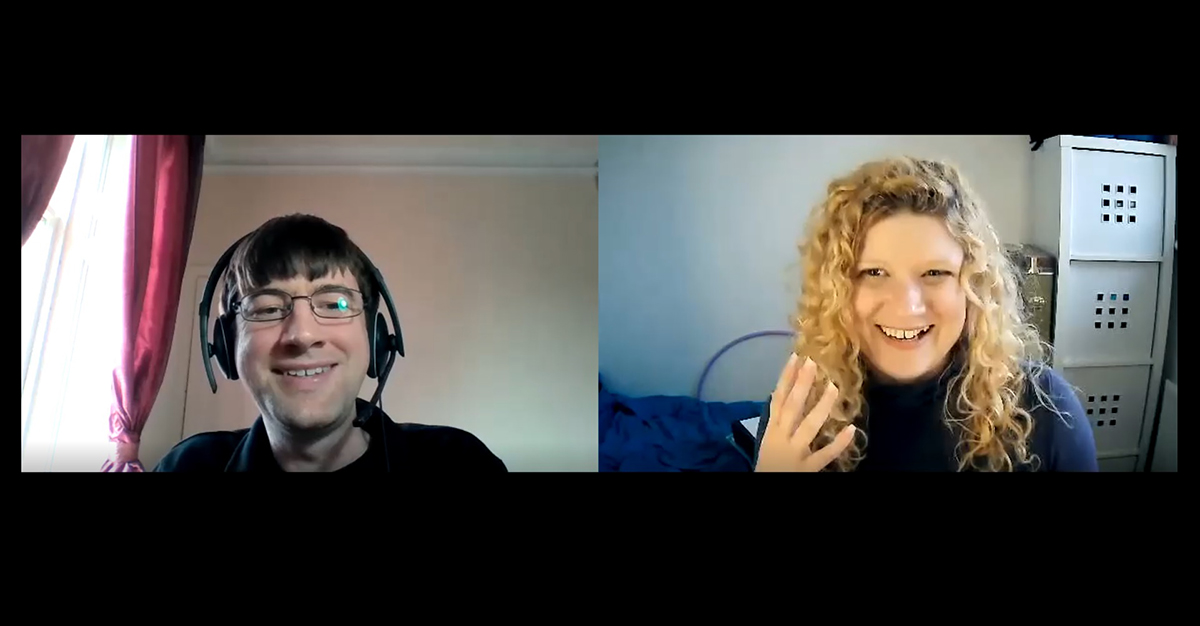
In Samantha's latest expert interview, Jonathan Downie of Integrity Languages gives a brilliant insight into the world of interpreting. Whether you are thinking of doing business internationally or have always wondered what the difference is between a translator and an interpreter, Interpreters vs Machines, you'll find the answer here. He also shares best practices for picking your interpreters and points out pitfalls that everyone should know about.
Jonathan is a consultant interpreter, working both as an interpreter himself, and finding the right interpreter for each project. His anecdotes make for an entertaining watch, while he manages to include advice for everyone.
Jonathan’s links:
Transcript
Samantha Tonge: Hi, it's Samantha Tonge from Labrakita Marketing again, and I'm doing another one of my expert interviews, that's either within marketing or connected to marketing in some way. Today I'm talking to Jonathan Downie from Integrity Languages, who is an interpreter. So Jonathan, do you want to introduce yourself?
Jonathan Downie: Yes. Thank you, Sam. I'm an interpreter. My job is to turn language barriers into opportunities. So, personally, I do conference and business interpreting between French and English, but my secret sauce, if you like, is that I'm what you call a consultant interpreter. I build teams of interpreters and give research-backed advice to clients in industry, commerce, and NGOs. If they have an event they want to put on or they have a client they're looking to woo, I'm not just building the team for them and finding the right specialist interpreters, I'm also giving them advice on the technology to use. I'm giving them advice on whether they should use machine interpreting or in-person interpreting for example. As I've been doing public speaking since about the age of 13, I also offer training for speakers who have never worked with interpreters before. It's surprising how often speakers get on stage and say things, which they regret five minutes later, when they realise they've accidentally insulted someone or accidentally messed up. So, as a public speaker myself, I've got the ability to advise speakers beforehand. I just talk through with them, what it is they're trying to do, what it is they're trying to achieve, how to use PowerPoint, and visual aids effectively, and that kind of thing, preferably months beforehand.
Samantha: Yes, that is a skill. You see a lot of death by PowerPoint, don't you?
Jonathan: I've got to a stage, where a lot of the time now, I refuse to use PowerPoint. I'm now realising that people have seen too many PowerPoint presentations back-to-back. I actually became famous for a little while amongst translators and interpreters, because I was the speaker who once pretended to fall asleep during his own talk. I was speaking about marketing and speaking about how a lot of people tend to just want the clients to come to them and don't want to go out and do the legwork themselves. So I talked about the kind of inbound marketing gone wrong, and said: "Well, I'll tell you what, if if that's what marketing is..." And I laid down on the stage and said: "Okay, if that's what marketing is, I'm going to go to sleep and just wait for them to come." And it was my way of making the point that, you know, inbound marketing is wonderful, but inbound marketing is not sleeping marketing.
Samantha: Yes. Oh, completely. Yeah.
Jonathan: And I've heard people say, you know: "word-of-mouth is the best way to market", or "inbound marketing is superior". And they think that means that they can sit at home, pet their dog, and the clients will just come to them.
Samantha: That'd be nice.
Jonathan: It'd be lovely.
Samantha: Yes, yes. There is quite a lot of work involved in getting your inbound marketing right. It's not as simple as just sitting there.
Jonathan: Well, I will say, inbound marketing seems to be dependent on a lot of outbound marketing.
Samantha: Oh, yes. And that's a very good point. It's about getting the balance right. Also, if you rely on any one tactic, you're not going to get your message through, no matter what you do.
Jonathan: Well, it's also things like... I'm going a bit off topic here, but I had a revelation a while back. At the time, I'd been trying to do the usual thing that a lot of interpreters do. I was applying to lots and lots of agencies and just send out hundreds of CVs. I eventually got to the point where that was getting me nowhere, and I was just feeling completely fed up. And so I thought: "Well, maybe I can find a way of marketing that I actually enjoy". So I started networking, I started writing, I started doing public speaking. And suddenly I realised that marketing could be fun, if you do it in a way that works for you. So not everyone's going to want to go out and do public speaking and do networking. But the difference is amazing, when you just happen to be in the right place, because you're doing the thing that comes naturally to you anyway.
Samantha: True. True. I mean, obviously, as you can probably imagine, there's not an area of marketing that I don't think is brilliant. Because it's always going to be useful for one of my clients.
Jonathan: You will need it somewhere. I came across someone recently who said they'd had a lot of success from direct mail, like through-the-post marketing. And I was like: “Wow”. You know, it was just at a point where I thought that that kind of stuff's dead. I put most of that into a recycle bin. Whereas actually for some people who might not have access to a computer or don't want to buy online or, for whatever reason prefer to receive it in the mail, it is perfect.
Samantha: Yes. When it happens to hit their desk at the right moment, when they happen to need it.
Jonathan: Yeah. I now have colleagues who send postcards to their favourite clients. And, you know, I might have sent Christmas cards, but I thought, a random postcard in the middle of the year for no reason, just saying: "Hi, I was thinking of you", could be taken the wrong way. But it could be just a way of reminding people that you still exist.
Samantha: Yes. And at the moment, because so much has gone online, people delete far more emails, than they put posts in recycling. Because these days, it's actually a bit exciting when something comes through your post, especially if it's a letter. You know, if it isn't a bill or a statement.
Jonathan: Or the other one is the political leaflets. We've just had an election in Scotland and the amount of political stuff that came through the mail is shocking.
Samantha: Oh, yeah.
Jonathan: But that's the thing. It seems to be timing, and it also seems to be... I'm realising that the kind of people that I want to work with, or hang out in the kind of places that I want to be.
Samantha: Yes.
Jonathan: I'm trying to parse the grammar of that sentence. It's difficult. But the idea is that, you know, if I want to work with gregarious, outgoing people, doing an email blast probably isn't going to be the best way to...
Samantha: Yeah.
Jonathan: And so it's... yeah. I'm not a natural marketer, but I've learned through my own mistakes, and figured out the kind of things that actually work for me.
Samantha: Yeah. And every business is different, so it's great that you've found what works for you. A lot of businesses are starting to think about doing business internationally. Especially now that we're all online and people are working from home, I think for a lot of people the world has opened up. I know, I took on my first international client this year, although they purely work in English. But a lot of people are probably starting to think about other countries where there is a language barrier. What sort of things do they need to think about in terms of foreign languages, if they want to go into that market?
Jonathan: I think the first thing that I would say is that languages don't exist on their own. They represent a kind of wider world of culture and different ways of doing things.
Samantha: Yeah.
Jonathan: I was once in a business negotiation where you had someone from New Zealand and some people from France. And the guy from New Zealand, practically as soon as our bottoms were on the comfy sofas, said: "Okay, let's get on with it. How much money do you want?" Which, in some countries is okay, but even in Scotland, we would find that a little bit over-the-top.
Samantha: Yeah.
Jonathan: But what happened there. The entire meeting was a mess, until it came time for dinner. Once the wine started flowing, and the food started coming, and people started talking about whose cousin works for whose uncle and whatever... Suddenly they got closer to a deal. And so there's the realisation that, just because you've got a new language, it doesn't mean that you're replacing word A with word B. It means that you're in a whole new market, a whole new set of people. As much as I hate the word “millennials”, everyone's talking about how to market to millennials now because that's different to marketing to older people. Think about that, but double or triple it when you're going into a new country.
Samantha: Yeah.
Jonathan: And so, you absolutely need interpreters and translators on-site, and you absolutely need local specialists on-site. I know some interpreters and translators, who do cultural consultancy. They will say to people: "Here's how to do business effectively in France, or in Germany, or Turkey, or wherever". And that makes a big difference. In the skill set, if someone needs to train you on how to do good business in, say, Turkey or Germany, is actually quite different to the skill set you need from someone who's going to allow you to be understood in those countries.
Samantha: Yeah. That's a very good point. Because even within the British Isles, there's quite a lot of difference in culture. When you go into a different country altogether, I can imagine there's another layer of difficulty. I mean, I used to work for a big international organisation. And, yeah, if someone was based in a certain country, you knew that they'd be overly democratic and take forever to make a decision, for example. Or they could be a bit blunt. And, you know, someone from X country or Y country might not get on very well. So you've got to sort of smooth it over.
Jonathan: Like Scotland and England.
Samantha: So I can see that in your marketing communications as well, getting that right is important. Getting the right language that doesn't offend people. It has to be right for the country. So I think, I mean, I guess this is partly a difference between interpreting and you know, in translation. It's not just a case of literally transliterating what you've got. You might need to put things in a completely different way, is that right?
Jonathan: So, classically, the difference between interpreting and translation is that translators work with written language.
Samantha: Yeah.
Jonathan: So someone, even who is subtitling your corporate video would be a translator.
Samantha: Yeah.
Jonathan: So anything that's complete before you send it to them...
Samantha: Yeah.
Jonathan: If it's dealing with written language, that's translation. If it's dealing with spoken language or sign language, that's interpreting. And interpreters tend to be there while the meetings are going on, or while the events are going on. Although the project I'm working on at the moment, isn't doing this now. But that would be the case in general. Translators tend to come once the website is written. Now, modern translators, if you're talking about something in marketing, they're very close to copywriters.
Samantha: Okay.
Jonathan: So if you send your website for translation to a very good website translator, not, you know, someone you might pick up on Fiverr, or wherever.
Samantha: Yeah.
Jonathan: If you're sending it to someone with a record, don't be surprised if a marketing translator writes back and says: "You know, I can translate it, but here's how a website looks in our country". Or for example, a classic one. There's a page that has to be on every website that's aimed at clients in Germany, that's not required in the UK.
Samantha: Yeah.
Jonathan: So a good website translator should be able to say to you: "Yes, I can turn your website into German. But if you're aiming at German clients, there's a legal requirement for websites that you have to fulfil, so I will need this information from you." I know one marketing translator who exclusively works in extreme sports. Extreme sports and water sports is what she does. And so she knows that sector incredibly well. And so when someone says, you know: "We've got this surfing website, we need to translate it". She's not just... a good translator doesn't just go: “This word to this word”.
Samantha: Yeah.
Jonathan: You're thinking about the client and the reader and what things are trying to do.
Samantha: They might have to completely rewrite it, but as you say, as a copywriter?
Jonathan: Yes, almost certainly. Whereas with interpreters, we do the same thing. But we do that on a three or four second delay maximum.
Samantha: Yeah.
Jonathan: There’s a running joke. Conference interpreters will tend to work in soundproof booths at the back of the room at big events and conferences. So there's a running joke that we are experts in reading how things are going, by watching the backs of people's heads. We have to be very, very good at reading a room. Especially if you go from the conference world to business interpreting, because in business interpreting someone can say something, and what they're meaning can be something different. So you have to find this balance between... You can't make up stuff, you can't completely change what the person has said, but you have to understand what that means in this context.
Samantha: Yes, yeah. Yeah, because context is everything, isn't it? And in different languages, the same word will mean multiple different things, won't it?
Jonathan: One of my favourite incidents, which is on my website, and in my second book, which I'll flash up later, I was doing a manufacturing interpreting job. And it was... Have you ever heard of a sales qualification meeting?
Samantha: Yeah.
Jonathan: So it was a sales qualification meeting, where the French company wanted to buy from this specific British company,
Samantha: Okay.
Jonathan: And they had to run through all of these legal and regulatory checks, and they had to check that the product was up to spec. The other guy was basically running through one of these questions and it turned out that the meeting almost went wrong. Because the French company was understanding quality as the percentage of PCs that were perfect, while the British company was measuring quality as the percentage of PCs that had a flaw.
Samantha: Ooooh.
Jonathan: So when the British company is saying: “Air quality is 3%”, the French company is like: "What?!". And so it gets to halfway through the second day of these negotiations. And what had been a very pleasant, charming meeting. I mean, apart from the boring bit at the start, where the British company insisted on doing a presentation on the history of their company. And I have no idea why they had to do that…
Samantha: Why do people do that?!
Jonathan: …because it's pointless. Sorry. Sorry, it turns around. Day two, it starts getting angry, and so they start to walk out of the negotiating room, poking at charts on the walls. And that's when you know, things are going south, when we're poking at charts on the walls. And eventually, I said: “I think there's been... the interpreter thinks there's been a misunderstanding, may I explain?” And I explained to both sides. Two hours later, they were signed off. And so this is where a good interpreter isn't just saying, what the speaker said, they're understanding what's going on.
Samantha: Yeah.
Jonathan: But that takes... you can't always do that. There are certain kinds of meetings where I would call in a colleague to do it, because I'm not good at reading those meetings.
Samantha: Right.
Jonathan: So my favourite booth mate is a finance specialist. I say booth mate, because we tend to work in teams of two. So she can hear a thousand figures, and knows in her head what those figures mean and what's going on. I hear a thousand figures and go: "Uhm... Laura!"
But, you know, no one can be an expert in everything. And I think with my skills as a consultant interpreter, I look at the brief and go: "Who do I know who can deliver?” And the bulk of the time it's: "Who have I worked with, who can deliver?" There are cases where you have to call in people that you haven't worked with, but you still have a network that you can rely on and you can find things out through. If you're running an agency, and you're getting, I don't know, a thousand queries a day, you just don't have time to have that market intelligence and go: "Oh, so and so is good, but they're not good at this" or "So and so is really good, but hold on, we've got this kind of speaker..." and just making those very human decisions. You can only do that at a certain scale.
Samantha: Yeah, so it's a lot to think about, especially if it's real-time...
Jonathan: Yeah.
Samantha: Yeah.
Jonathan: I mean, you also get high profile assignments. Like, I once did 14 minutes of interpreting, where a French musician was being interviewed by the French Consul General at the Scottish Parliament, and my English was then being turned into Chinese, as I was interpreting.
Samantha: Oh, my word.
Jonathan: Yes, a very full Scottish Parliament Debating Chamber with Culture Ministers from all over the world. And I have a 14-minute shift, which was live webcast, it was transcribed, it was... That's the kind of thing that you get dropped into sometimes.
Samantha: Hmm. Yeah, I'm always amazed... I mean, partly because I'm so useless at languages, you know, I barely cope with English. My mind boggles at the idea that you're listening, translating in your head, and then speaking, and it's all... But they haven't stopped speaking, you still have to listen to what they are saying.
Jonathan: You're also monitoring yourself, and you're also reading the room at the same time.
Samantha: Yeah, that's amazing.
Jonathan: I mean, we have classes in interpreter school. The first few weeks of interpreter school, you just think: "How on Earth am I going to do this?" They ramp you up fairly slowly. But there's a tradition that around January or February they start giving the students the kind of things that they'll come across in real life. So things like: speakers with strong accents, speakers going quickly, speakers that say are going to speak about one thing then speak about something different, all the stuff. If you train as a conference interpreter, most places will also train you in dialogue interpreting, which is what you use in a negotiation or a smaller meeting. And that can go wrong in as many ways as there are people in the world.
In marketing, people tend to think: "Right, I can set a target, I can control the process". And if you're doing something written... the great thing about written words is that they don't move. And so you have, you know, here's what we've got to begin with, here's the target we're aiming at, you can map the process, and you can track the process as it's going.
Samantha: Yes, yes.
Jonathan: In written translation, you can largely map and track the process. And in fact, there's been a lot of research mapping and tracking the process of written translation. Whereas with interpreting, the process itself is changing, as you're interpreting.
Samantha: Yeah.
Jonathan: So if you've ever been in a meeting that suddenly took a left turn, which I think most meetings nowadays tend to take, we have to be aware of that and know and try and work out, where that left turn is going, and whether it is going to come back round. Because if I... the French word order isn't that different to the English, but my German colleagues could be waiting a long time for the verb, which tells them what the person is actually doing. So they are having to predict in advance, whether this is a negative or a positive sentence before they even know the ending of it.
Samantha: Right.
Jonathan: The ideal for me is that, if a client has a negotiation with a company in Japan or wherever, that they don't phone up or email 24 hours before and say: "I need someone tomorrow".
Samantha: Yeah.
Jonathan: It's not frequent, but something like that happens more often than any interpreter would like. Where you're going: "Maybe. The answer is maybe". Or even something as simple as: They've already set up the event, they've already decided on the agenda, and they call or they email a consultant interpreter and say: “Here's the agenda, here's...”, you know, "can you send us an interpreter?" Because it could be, you know, classic case of... I was once in a meeting where the finance talk came at half past four. That is not a good time for finance talk. So, okay, it's half past four, people are already looking at their watches and here comes the accountant. Well...
Samantha: Unless that happens to be the sort of thing that excites you, which I guess isn't many of us.
Jonathan: Yeah, so it's kind of this balance between, you want a client to come with a clear brief, but you want there to be space, as a consultant for you to say: "Right, let's talk about the how".
Samantha: Yeah.
Jonathan: So I guess it's the difference between someone coming to you and saying: "Here's what we want to achieve, with…", and "we want a social media campaign on Twitter, and we want to do this". And you are like: "Maybe that's not the best way to reach 65-year-old people with dogs?"
Samantha: Because that's some of the things you get involved with? Finding someone who can do translations for social media as well as...?
Jonathan: It's whatever I get asked for. The great thing is that translation tools, now... So, there's a lot of interpreting technology that's around, that helps out someone who knows about it.
Samantha: Yeah.
Jonathan: Translation technology is at a point where, if you have something like a manual. You send it to the translator in the manual’s original format. They use their special tools, and it comes back reformatted, exactly aligned, to go out to the client. So good translators are producing publication-ready stuff without any need to convert the text of a website and send them as text. You send them an HTML now.
Samantha: Ah, handy.
Jonathan: They process it and it comes back already in the correct layout, because the tools that they have can extract text from just about anything and keep the tags. So it just logs the tag down and gives them what they need. Now, the issue with that is, if you have a website, and you say: “Well, this tag needs to be a hundred characters long”. A hundred characters of English is very different to what you get for a hundred characters of French or a hundred characters of Chinese or whatever. In anything that has to do with languages, flexibility is key. So someone might say: "Okay, we don't want to pay for simultaneous interpreting equipment, but we want the conference to last half a day". Well, then we would have to say to them: "In that case, you're either only going to have a maximum of five people from each language, that you can have at the conference, or you're going to have half the content".
Samantha: Yeah.
Jonathan: And people are like: "But why?" And you have to sit down and explain carefully all the different ways to interpreting that can be provided at an event. And people suddenly go: "How do you know this stuff?" And it's like: "Because this is what I do".
Samantha: You are the expert.
Jonathan: I have a Master's and PhD in this. If you asked me what the difference between simultaneous and consecutive interpreting is, I can tell you. And I can tell you in one line, I can tell you in a page, I can do it in a PhD thesis, take your pick. But, you know, you can never make the decision for the client, but you advise them as to where the key decision points are going to be.
Samantha: Right.
Jonathan: And I would never say to a client: "You absolutely have to have simultaneous interpreting". I would say: "Okay, you want to achieve this. If you do it with simultaneous, this is what's going to happen. If you do it with a consecutive, this is what's going to happen. If you do it with whispered interpreting, this is what's going to happen." And you know, if someone wants me to walk them through every option, I can, but normally I would just say: "In this case, I would recommend this, but there are other possible options, if you want to explore them". And most of the time, clients will go: "Can we just get the one you recommended, please?" And it is like: "Yeah, fine”. But I have had occasions where the clients asked: "But what if don't want two interpreters, what if we only want one?" And it's like: "Okay, okay, we will chat”. And it's not that we want to take over. It's that we know the science, we know the practice. We know what one interpreter can do. We know what two interpreters can do. And we also know what interpreting simultaneously for more than half an hour does to your brain.
Samantha: I can imagine. It's hurting my brain just thinking about it.
Jonathan: If we're doing simultaneous interpreting, we work from twenty minutes to half an hour shifts. If we’re working remotely, the twenty minutes are going to be twenty minutes. And that's because numerous studies have shown that after about twenty minutes, half an hour, the quality starts going downhill as your brain just goes: "Nah, enough”.
Samantha: That makes perfect sense to me. It's a lot.
Jonathan: There have been people who sat and like had their brain scanned while doing interpreting.
Samantha: Oh wow.
Jonathan: Yeah, I was in Geneva to celebrate a 100 years of conference interpreting, at the end of 2019. One of the speakers’ job was to brain scan interpreters, and I'm like: "Cool”.
Samantha: That's very interesting.
Jonathan: Yes, when you scan and then see like a 3D, drone-style view of the inside of someone's brain, you go: "I'm slightly uncomfortable at getting to seeing this closely into someone's brain there."
Samantha: And about the technology side of it. As, I think that if you're looking at entering a new market, you know, you've got different language, different culture, there's technology that people also ought to start thinking about, right?
Jonathan: Yes. So we are currently in Zoom. Zoom Professional has an interpreting widget, if you like. The use of technology in Interpreting has gone through the roof in the past year, because interpreting went from mostly in person to now mostly remote. So depending on what you want, you can use telephone interpreting, but you can also interpret via something like Zoom. There are now specialist remote simultaneous interpreting platforms for if you have a conference, you can plug that in and the interpreters then get an environment. That's a lot more like where they're used to working. So if you imagine the difference that people felt from working in an office to working at home, interpreters had something similar from having our beloved interpreting consoles, to all we have is a screen with buttons. And the better remote simultaneous environments have realised that and have made their environments as much like what we used to working with as possible. Those now support multiple-screen layouts, for example, so that we can look at the speaker and their notes and not have to go: "Where am I?" There's also machine interpreting and people are asking about this more and more now. I wrote a book called Interpreters vs Machines, available from all good bookstores. And well, machine interpreting is doing things that no one expected it to do. So, for instance, if you have a client that's saying: “Actually what we really need is, we really need people to get access to something”, for example, if it's emergency medicine, or you have a client that has a lot of customer-facing interaction on a large scale,
Samantha: Yeah.
Jonathan: I co-host a broadcast, and we had a guy from a machine interpreting company on there saying: "It is not feasible to produce interpreting at certain scales. You just can't get enough good human interpreters, or if you can, the price is just expensive”.
Samantha: Yeah.
Jonathan: So there are occasions where, for example, if you need like a kind of a customer service triage, then there are machine interpreting technology that you can use. Like a translation chat bot or similar, that will allow you to do some basic customer service triage at scale. But then when it comes down to the sales conversation, or the interaction with a representative or something where there's real value being exchanged, you bring in a human. And you bring in a human using whatever technology or platform works. So if you have a conference where everyone is sitting at home, there is no "there" for the interpreters to be, so you want to look at remote interpreting and you want to ask the question very early on to an agency or a consultant: "Are you independent of the platforms or are you always going to use the same one?" Because I know at least one agency in Scotland that have paired up with a platform. Whereas as a consultant, I'm platform-agnostic, I just go with: "Right, let's figure out what the best one is here." And I... you know, I know guys from different... I know guys and ladies from different platforms, and I can ask the hard questions. But a client needs to know very quickly if they're going to be dragged into something or being forced to use a certain platform.
Samantha: Yeah.
Jonathan: A platform, which might not be right for them.
Samantha: Yeah. Marketing agencies do the same.
Jonathan: Yes. Consultant interpreters don't have deals with platforms normally. And so even if someone's working in something in Germany, my job isn't to win the job, my job is to get the client the best service possible. So if they're doing something in Germany, and they're doing remote interpreting, the first thing I would do would be to send them straight to my colleagues in Germany, who are consultant interpreters there.
Samantha: Yeah.
Jonathan: Because they know the local market way better than I ever could. And they know which platforms work best for that kind of market. But because interpreting technology has gone through the roof in the past year, and everything has changed so much. It's gone beyond the point where you can expect a reasonable, non-interpreting human being to know enough about the technology to make a wise decision.
Samantha: Hmm, yeah.
Jonathan: And even some consultants... I mean, even me, as a consultant at times will face certain questions, where I go: "Hold on a minute." And I'd get someone who works for this specific platform to say: "Can you integrate with x?" Because that is not information that I always have to hand. My job isn't to know everything. My job is to know the right person to ask sometimes if I don't know. And to know enough to say to clients: "Well, okay, you've got this negotiation, then actually, here's the kind of solution that would be natural in that position." When it comes to plugging into Zoom or whichever events platform they're using, that's a conversation I then have with the platform themselves and say: "Okay, let's see how we can do this." But it's getting to the point where people are having to really specialise. And if the specialists are having difficulty to specialise. Then what clients really need to know about the technology is that there's lots of it. It's complicated. And we are at that stage of development, where not everything talks to everything yet. So talk to a consultant early and find people who are not in the pay of a certain platform.
Samantha: I'm guessing that's not always obvious.
Jonathan: If you ask, people should tell you. So, for example, there are remote interpreting studios set up around the UK and around the world, and if someone said to me: "Do you have a preferred remote interpreting studio?" The answer is: "Yes." And that's always the same, because if I need to use a remote interpreting studio, there's only one I'm going to use. It's not that I've got a deal with them. It's just that they're the best. You know, it's just...
Samantha: Yeah.
Jonathan: You know, if someone asks: “Who do you know who's good at supplying interpreting equipment?” Wherever they are in the UK, I'll give them the same phone number. Because there's a company that I work with, and there aren't any kickbacks, but they're just brilliant. So I don't care that there are no kickbacks, because I know the job is going to go well. But my thought is, people are duty bound to tell you if they're receiving a kickback, or if they've got an exclusive deal. Ask upfront, you know: "Have you got a deal with...?" And it could be useful, because it might mean that you get money off, it could also lock you into stuff that you don't really need or want. So, you know, as soon as you're sending the brief across, ask. I've got a blank brief that I'd say: "People, fill in this, I've got a blank brief, so that you're not getting tons of emails." You know, send that across, with the brief saying: "Do you have any exclusive deals? Are you tied into a contract with…?" And if they're not willing to tell you, you shouldn't be willing to work with them.
Samantha: Yeah, yeah, if they're being cagey, there's a reason.
Jonathan: If on the other hand, they say: "Yes, we do. It's with X." Then that's fine. At least they're honest.
Samantha: Yeah.
Jonathan: Whereas, if they reply with something like: "That's commercially sensitive information," then the answer is: "Thank you very much, I'll go elsewhere."
Samantha: Yeah. Okay. Interesting issue tips there to think about. So, do you ever get involved with or have you ever get to a point with a client, where you had to say: “It might be best to have someone based in France” or “You need an office in France, because the amount of work is just getting ridiculous. It'd be cheaper to have French speakers in France doing business for you”?
Jonathan: I haven't got to that yet. But it's a point that I would be quite happy to get to with a client.
Samantha: Yeah.
Jonathan: So there's a classic thing, The House of Lords a few years ago released a report saying that British companies lose out on 50 billion pounds worth of contracts a year because of lack of language skills.
Samantha: I can imagine. We're rubbish at languages. I mean, you're not.
Jonathan: Yeah, but so there's a point where there's a famous translation scholar called Anthony Pym, who did this study and he talks about the point where interpreting and translation aren't your best option, learning the language is your best option. And I've never seen a client get to that. But I think, if I was seeing recurring work, and it was the same internal meetings all the time, I would begin to say: "Actually, maybe you should have an office in France." It's not that I want to lose a client, you know, I love clients. But also as an interpreter, and especially as a consultant interpreter, I am very conscious of where I'm providing value.
Samantha: Yeah.
Jonathan: And, you know, if you're doing a lot of marketing for the same company, and there's just recurring stuff, that you could automate, the value that you're providing has gone down. And so if I'm doing the same meetings... I know some interpreters who love doing the same meetings all the time, but you know, if you're doing the same internal meetings all the time, and you're practically able to predict what people are saying, because there's nothing new. It's just routine stuff. Then there should be a point where you say: "Am I providing value anymore?", you know: "Can I provide more value by actually handing over to a local specialist to set them up an office?" Now, that doesn't mean that I'll never work with them again, because, you know, they might have been working in France and they go: "Oh now we want to go to Germany," and the process repeats. But...
Samantha: And they're more likely to recommend you as well, because they can trust you.
Jonathan: Yes, my job is not to suck as much money out of a client as possible.
Samantha: Yeah.
Jonathan: Now... Do I like getting more money from clients? Yes. Am I aware that in the UK interpreters' fees tend to be lower than they're elsewhere? Yes. But by the same token, I'm not doing my profession any good, if I'm continuing to provide a service, where it's not really needed.
And this is where it actually comes down to my PhD. I was looking at kind of three different approaches to interpreting and there is an approach to interpreting that's just... Well, we only have it because it looks good, or because it's politically nice. And every interpreter that I spoke to about it said: "Yeah, we've been in meetings like that." And I was like: "Yes?" Just because we've been in meetings like that doesn't mean that they're a good thing. And it is similar to, you know, companies who want a flashy website written in Flash, with amazing graphics that takes ten and a half minutes to load, but there's literally no point to it. You know, it looks pretty, but it serves no purpose. And it's about getting to the point where you're honest enough to say: "I know this looks pretty." And I personally have never gotten there, and I hope I never do get there, because it's a difficult conversation to have. But yeah, it's being honest and providing the right service that the client needs, which sometimes isn’t necessarily the one the client originally asked for.
Samantha: Hmm.
Jonathan: I had a client at one point saying: "Oh, we really need interpreters, we really need interpreters." And when I sat down on the phone and talked to them, it turned out that they didn't need interpreters, they needed subtitlers. And, you know, people don't know the difference. And I'm not surprised, because I've been in this industry 12 years and I still have to learn new things. And I have to continually learn, especially because my association has a thing for tracking your continued professional development.
Samantha: Yeah.
Jonathan: If I'm not on top of my continued professional development, you fall behind within months nowadays. Because the technology changes so quickly, that there's a whole new branch of interpreting technology coming out that I need to start getting my nose into. And the technology is going to help us do our job more efficiently, but I just haven't had time to look into it. Because it's not something that I need every day.
Samantha: Yep.
Jonathan: But my colleagues in other countries where they need to be able to do certain things every single day, they've jumped into it headlong. And I'm like: "Hold on, hold on, hold on. I'm just back from paternity leave, I will get to it." But because it's technology for a certain need that I don't have every day, it's not an urgent thing for me. Whereas things like understanding client needs, being able to manage complex projects, that I need every day.
Samantha: Yes.
Jonathan: Those I actually need every day. And even continuing to work on asking the right questions. I thought I knew how to ask the right questions. And it turns out, no. You learn every day how to ask the right questions, and what was the right question a month ago, isn't the right question today. But that's just people for you. That's just life.
Samantha: Yeah.
Jonathan: And everyone thought they knew what they were doing, and then the pandemic hit.
Samantha: Oh, yes. That was fun.
Jonathan: But that's the thing, we're kidding ourselves. So this is marketing-related. There's a principle that people tend to think about marketing, which is: "The more that you do, the better the results you'll get." And that's not actually true.
Samantha: Yeah. It's not as simple as that.
Jonathan: No.
Samantha: It really isn't.
Jonathan: I had someone tell me: "You know, you can't be successful in business unless you do 60-hour weeks." I'm like: "No."
Samantha: No.
Jonathan: One of my measures of success is that I'm NOT doing 60-hour weeks.
Samantha: Yeah, I mean, part of the reason you go out on your own is that you want to get the balance right. And you wanted to get some of your life back. I mean, me being self-employed, there are going to be weeks where you might end up doing 60 hours, but then the next week you have off and recover, you know?
Jonathan: Yes. But, you know, the pandemic has taught us that business is not simply cause and effect.
Samantha: No.
Jonathan: It's not that if you do X, Y will happen, and you make a certain amount of money. That's not business. You know, it may be the kind of business, people sell online courses about, you know, in a buy my system-kind of way. But that's not how business works. Business is about human beings, you know, interpreting is about human beings. I used to have this kind of catchphrase/motto thing that is in the book, where I said: "When I started interpreting, I thought it was language skills with people attached. Now, I realise that it is people skills with language attached."
Samantha: Yes. I suspect that's the case in pretty much every industry.
Jonathan: All the stuff you learn in uni...
Samantha: It is also the quality of the people you're dealing with, that has a huge effect. Yes.
Jonathan: But the thing is, that everyone goes out to get the technical skills. And they matter, you know, I'm not gonna say the technical skills don't matter. But the technical skills are what you deliver, using the people skills.
Samantha: Yes.
Jonathan: If you don't have the people skills… In every area of business there are people with no people skills. And you know, we cannot possibly name these, but everyone knows people in their line of business that have the most off-the-charts technical skills, but have the people skills of a wet plank of wood. And you know that you either can't possibly work with them, or you can only work with them under very specific circumstances. And everyone knows that person. You know, as I'm saying this, people are watching this video going: "He's talking about Bob or he's talking about Amy or he's talking about..."
Samantha: “I know loads of these.”
Jonathan: And I'm not talking about anyone in specific, I'm just saying: "This is true."
Samantha: Yes.
Jonathan: I mean, the vast majority of interpreters have excellent people skills, because if we don't, we can't work. Simple as that.
Samantha: Yeah.
Jonathan: But I have some colleagues, who... if you have a technical meeting. So like, you know, we once did a job on demolition. I have interpreters that I would send to any demolition, any technical meeting. I don't care what your factory makes, this is the team I'm sending, because they're just brilliant at technical stuff. However, I wouldn't put them within five miles of a sales meeting.
Samantha: Yes.
Jonathan: Because they're wonderful technical people. Or even... everyone's been to that type of conference where you have a speaker, who's a frustrated Hollywood director. It takes a certain kind of interpreter to deliver that and not sound completely crazy. And you have to choose. I have one colleague who loves doing motivational speakers. And he could do the rah rah stuff and get the people as excited in his languages as the speaker did. On the other hand, I also know some interpreters who will turn a motivational talk into an accounting talk. That's just how they work.
Samantha: Yeah, I can imagine.
Jonathan: Like, you know, some marketers are great at b2c, but give them b2b and they fall apart.
Samantha: Yeah.
Jonathan: And vice versa.
Samantha: Yes. Yeah, or run a mile because they just don't want to do it, because they find it boring.
Jonathan: I'm not going to say anything about boring assignments, because this is going out, but, you know, my thing is to clients: If you've ever sat in a meeting and thought: "This meeting is so bad, I feel like stripping down to shorts and T-shirt and running outside." Okay? We feel that too. But we can't leave. And, you know, the kind of meetings where you're playing Candy Crush on your phone. We want to do that too. But we have to keep working.
Samantha: And you mentioned that fees in the UK aren't particularly great compared to other countries. Do you think that's because we don't really value it? We just assume that everyone else speaks English?
Jonathan: It's partially that. Fees are beginning to come back up though. So like at the top end, they're beginning to match other countries'. In the kind of middle and the bottom, they're just not. The reason why fees tend to be lower in the UK is because of a couple of things. One, that every interpreter that I know in the UK is an 'interpreter and...' So they'll be an interpreter AND a translator, or an interpreter AND a teacher or in my case, you know, I'm a consultant interpreter, so I'm an interpreter AND a researcher.
Samantha: Yeah.
Jonathan: And so because they're 'interpreters and...' there's a different way of going about business. And if you're somewhere like you know, Paris, where interpreting is everything that you do, and you are kind of flooded with assignments all day, every day. The reason why the top-end fees are actually beginning to creep up to where I would say they should be is because even those who are 'interpreters and...' are seeing where the market is going and seeing that the need is growing.
So I recently wrote a paper talking about what Brexit is going to do to interpreting in the UK. And from what the government has said about the new immigration regulations, we're going to have, what you call a supply shock, where suddenly there's more demand than there is supply. Because if you imagine that, you know, for a lot of the events in the UK, you'll be using interpreters who are based in the UK. But they may originally be from Tajikistan, Germany, Luxembourg, wherever.
Samantha: Yeah.
Jonathan: Now, when you had a situation where a free movement from the EU was fine, someone could train in France and then move to the UK. No problem. Nowadays, if you train in France, and you want to move to the UK, you can't move to the UK under the current regulations. From what I can see, you can't move to the UK to start a business, you have to move to the UK with a job offer.
Samantha: Yeah.
Jonathan: When almost all interpreters are freelancers, that creates a supply shock. And so I think, now that the Brexit deal is done, more companies are looking at going abroad. Conference interpreters certainly are beginning to specialise more, because, you know, if someone's got a medical conference, I have to send them a medical conference interpreter. I don't have a choice. It's not going to work otherwise.
Samantha: Yeah.
Jonathan: And there are now almost enough medical conferences, that it is becoming the field where we are specialising. Especially with the advent of remote interpreting where the interpreter can be anywhere. And so you're seeing some interpreters' prices haven't crept up yet, but I think they will do soon. Because when you get a supply shock, the natural thing for interpreters to do when they're overwhelmed is... and for any business to do, when they're overwhelmed is: "I need to get my prices up to give me that gap to get my life back." And to be able to deliver, you know, you can't deliver high level content, seven days a week, it is just impossible. You can't do it. If you try to do 365 days of interpreting in a year, something will go wrong at some point. So I explained to clients that we have a day of preparation for every day of the meeting. Roughly. Sometimes more, sometimes less. So if they've got a two-hour meeting, we need to bank on the interpreters taking two or three hours to prepare. If they've got a four-day conference, we need four days to prepare. And so what do you do when suddenly supply contracts?
Samantha: Yeah.
Jonathan: And you know, interpreting went really quiet for a while but now it's coming back. And the UK has historically had lower prices, but I can't see that lasting for long. As the UK has had lower prices, because we've been able to get the supply and people were able to move across borders quite freely. You close that door... Especially when in-person events come back strong… I don't think I've said this before, but I will say it now. When in-person events start coming back at full pelt, even in-person business meetings. If you don't book your interpreters early, you might not get them. Because we're gonna be overbooked.
Samantha: Bit of good advice there.
Jonathan: I would say so. It used to be, we'd say to clients: “Book us two weeks to a month in advance.” I would now say to clients: "Talk to the consultant. As soon as you've booked the venue, get a consultant interpreter. Even, arguably, before you finalise the plenary speakers. As soon as you've got a rough agenda and the venue is booked, get your consultant in, because they can then start talking to interpreters and start picking time, because if you get a slippage in your timeline..." I'm finding it harder when things slip. I'm finding that interpreters are less able to have the flexibility that they used to have, because they might just be booked. And you know, I know interpreters who are on the UN list. And so if the UN called you, you go. So you're gonna have to start thinking more in advance, you're gonna have to start thinking about what kind of supplier you want to work with, really far in advance. So just, you know, phone the agency two days before is not going to work anymore.
Samantha: Yeah. That's an excellent tip. If you've got a marketing event that's going to require other languages, speak to Jonathan now!
Jonathan: Yes, because things are getting crazy. But also, if you're doing marketing, there is this one thing that I’ve seen, where events were not taking advantage of what’s available. Say you have a marketing event, your product launch, is a classic case. So you have a product launch, and you're launching it in four countries.
Samantha: Yeah.
Jonathan: Okay. I don't care whether you're doing it as an in-person event, or a remote event, or a whole bunch of advertising videos. If you’re going to launch a product in four countries, you're going to need all the languages. Classically, I've seen things where people showcase something, and they've said: "Well, we're gonna have the speech interpreted or we're gonna have the event interpreted and there you go." But you've got the whole marketing value chain. And actually, if you've got a consultant interpreter, the good ones know translators as well.
Samantha: Yes.
Jonathan: So I'm quite happy to arrange that. I've got projects on the moment, where I'll be arranging translation for parts of it soon. If someone says to me: "Oh, we've got a product launch. Can we have the websites done and the event interpreted?" Well, that's fine, because that's a service that I can arrange. And it makes sense, because then while the translators are translating the website and getting your copy right, that can be passed directly to the interpreters who then feed that into the copy that they're speaking. If you separate those two and the classic agency model is to separate translation and interpreting, because they're managed very differently.
Samantha: Yeah.
Jonathan: The information from the translators might not get to the interpreters, and they might be emailing to say: "Well, what does this term mean?" And, well, the translators have already fixed that.
Samantha: Yeah.
Jonathan: But no one has told them.
Samantha: Yeah, I can see that sort of crossover and being really useful to understand what the other side is doing. Yeah.
Jonathan: Yeah. In a way, you know, for example, you've got a video coming out... Even talking to a tech consultant and ask: “Should we dub this or subtitle it?” I know audio visual translation experts that I can email within five minutes and say: “Okay, they're going to X countries, are they a dubbing country or a subtitling country?”
Samantha: Yes. 'Cause if you go abroad, sometimes, you see an English film or something, that's been dubbed over. And you think: “That would drive me nuts, personally.”, but yes, certain countries prefer that.
Jonathan: And if it's dubbing, then that's a completely different process. And it's these things that are tricky, unless you know what you're looking for. Or you have things like… I had a client recently ask: "We're doing some event, can interpreters handle a question-and-answer session?" And he thought it would be a really big issue. And I'm like: No, Q&A sessions are something that we do practically every time we are interpreting. And they are like: "Oh, but they are interpreting using Zoom," I was like: "Okay, let's talk through how this is going to work." And we came up with a system that was right with our client. And that was just at the end of last year, you know. And so the answer isn't always, you know: "Yes, we can do this." It's more often actually: "Let's work out how we're going to do this." Most of the time, the answer isn't going to be: "No, you can't do it." Unless you phone me two days before you need it. That's all. But you know, if you give people enough time, the answer is really very, very rarely going to be no, it's usually going to be: "Let's work out how."
Samantha: Yeah.
Jonathan: And let's work out, you know, within the budget. My favourite budget is: "It just needs done." I love that budget. “It just needs done.”
Samantha: Yes.
Jonathan: That's my favourite budget. But you know, the budget that says we've got X thousand pounds, and we want to do... You know, some organisation will have got 2000£, and they want to do this. And I'm like... Sometimes yes, sometimes... some things just don't cost 2000£. If someone says you know, we need 12 interpreters working simultaneously at a conference and we've got budget of 2000£. The answer to that is going to be no.
Samantha: Yeah. I can see that straight away.
Jonathan: No, no no no no no. Two thousand pounds is the cost of the equipment for two interpreters. No, just no. But that's where you have to have the conversation. And I don't know if there's a common thing in business, but I'm beginning to come away from, and think about rejecting clients who come with: "Here's exactly what we want done." The clients, who don't send a brief, they send a list. You know, they don't send a brief, they send a ransom note. Another tip, if you need something in different languages, any service provider that says they can give you an instant quote, I would be very wary of. So for example, instant quote in the interpreting world is crazy, because different languages cost different amounts of money, that's just specialisms cost different amounts of money. That's all, I think. Instant quote in translation means that they have set a fee that they will pay the translators and that fee's not going to change according to the job.
Samantha: Yeah, so they can only send/get whoever they can afford, not who's right for the job.
Jonathan: Yes. So an instant quote in translation usually means that they have a set fee. So, for example, I have some colleagues who are specialist legal translators, one of whom is a former practising barrister. He's not going to charge the same, as someone who says they can do legal translation, because they've listed it on a random website.
Samantha: Yes. Yeah.
Jonathan: And, you know, if someone says they need a medical translator, if it's a case of a life and death thing of, for example, they need to get these medical records right, because you need to figure out which drugs to give the person. That needs a different process than if someone just wants to know something. You know, they're just curious or whatever. Or the classic one, which tends not to happen in interpreting, but happens in translation is: "We need this for regulatory purposes." That means that it's going in a cupboard. And, you know, if someone can give you an instant quote, it means they're not thinking about what you need.
Samantha: Yeah.
Jonathan: If, on the other hand, they say: "Give me a couple of days, and I'll get back to you." That's more helpful for everyone, I think. Personally, I spend time getting the right brief, then I'll say: "Okay, I will put together the right team. And I'll come back to you, in two or three days or whatever." Depending on how, you know, if it's twenty interpreters, two or three days is not gonna cut it. But you know, if it's, for talking sake, if someone says, you know: “We need French for...” and it happens to be something that I'm happy to interpret myself, I can probably give them a relatively instant quote.
Samantha: Yeah.
Jonathan: Because, yeah, I know what I would charge for that. And I can have a phone call with AV guys, it's fine. If on the other hand, someone's wanting six languages, a medical specialist, that's more complicated. You know, I have the contact, but what I don't necessarily have is a time. Because if you are needing medical specialists in six languages, the problem is that they're probably already at a conference when I'm emailing them. They're not sitting twiddling their thumbs. They're out, working. So, if I emailed them at 9am, I might not get a reply until 5.
Samantha: Yeah.
Jonathan: So it would be a fallacy to just pluck a number out there and say: "There it is." Every project is different. And so stay away from instant quotes, and also stay away from: "We have thousands of people." It's like: "yeah, and you don't know any of them."
Samantha: Yes. Yeap.
Jonathan: We have thousands of suppliers. Yeah, name one.
Samantha: Yeah, okay.
Jonathan: And the other one is, if you're working with anyone in the UK, there is now a gold standard in the UK for... if they're a consultant interpreter, they should have membership of a professional association.
Samantha: Oh, that's useful to know.
Jonathan: So, in the UK... Well, internationally, there's an association called AIIC, (International Association of Conference Interpreters). A lot of consultant interpreters are members of AIIC. In the UK, you have the Institute of Translation and Interpreting (ITI) and the Chartered Institute of Linguists (CIOL). For commercial stuff, those are the three that you need to be aware of. When it comes to legal, that's a whole other ballgame. Talk to a consultant, they will sort that out. Legal is the National Register of Public Service Interpreters (NRPSI), a lot of legal interpreters will be on there. Or the Association of Police and Court Interpreters (APCI), but you know, that's basically… ITI, CIOL and AIIC are the three that you need to know, for individuals. If it's a company of any sort... So I would refuse to work with an agency that is either not in Institute of Translation and Interpreting (IT) themselves, or in the Association of Translation Companies (ATC), because those are the two associations. And someone asked me once: "Why do you say you wouldn't work with an agency that's not in one of those two?" Well, the reason is because if they've signed up to the ATC or ITI, they've signed the code of conduct.
Samantha: Yeah.
Jonathan: So if something goes pear-shaped, there's a system that allows you to flag up: "This has gone pear-shaped."
Samantha: Yes.
Jonathan: And they also... they know they're being watched.
Samantha: And then presumably, anyone can set themselves up and call themselves an interpreter, that doesn't necessarily mean they know what they're doing, or have the qualifications.
Jonathan: Well, also... like, I happen to know a list of the universities that train conference interpreters really well.
Samantha: Yeah. Okay. Yep.
Jonathan: So if I'm... you know, ninety odd percent of the time I'm working with people that I've already worked with, or who were recommended by those I've already worked with. Otherwise, I will use my knowledge of the training system, and I'll use my knowledge of the associations to ferret out the good people. And so, if someone is an ITI member, and especially if they're what's called a qualified member status and an MITI, I am more likely to work with them. The MITI exam, especially for translation is hard. And the new interpreting exam is hard. So if someone is a translator and they’ve got an MITI... It's a tough exam, and it's done under realistic conditions, so the task is, as if they were getting a real assignment.
Samantha: Okay, yeah.
Jonathan: And they have to interpret like a real assignment. Besides, the markers are fellow translators. And translators are, by nature... they will spot anything wrong. And so you know, you work with someone who's in an association, they know they're being watched, they are accountable. And all of the associations are promoting continued professional development as well.
Samantha: Yeah.
Jonathan: So then you're coming to someone, and it's not just that they've got a piece of paper or a diploma, or whatever. You know that you'll get someone trained, for goodness' sake. But it's also that they've decided off their own back to pay the time and the money to show the world that they care about what they're doing.
Then there are also things that you start to encounter. For example, I love when people google me now, because Google has given me the little sidebar. But you know, you should be able to find out a decent amount about anyone you're going to work with. Especially if a consultant interpreter isn't findable online, then something's wrong, 'cause you need to be findable.
Samantha: Yes.
Jonathan: But, you know, you can tell a lot by the way that they approach their website as well, and the way they approach their communications. But yes, certainly, always go for someone who's in an association.
And another tip about this. So there's a very famous finance translator called Chris Durban, who says that great translators ask questions. And it's the same with interpreters. If you ask someone for a quote, and they just send you an amount back and say: "It will be there by Tuesday." Worry. Because… maybe you've got a better experience with this than me, but I've never ever, ever seen perfect information on the first query email. I now have a blank brief that I send out to people because the first query email never has everything you need.
Samantha: No. No, I mean. Yeah, I always have discovery meetings with clients, because sometimes, quite often, they think they know what they want. But they don't.
Jonathan: Yes. You have to do the Spice Girl thing with them: "Tell me what you want, what you really, really want."
Samantha: Yeah, it's: "What are you actually trying to achieve?" Not: "I think I need X, Y and Z," a lot of the time. Yeah.
Jonathan: And also, there's a difference between goals. People usually set numeric goals.
Samantha: Yep.
Jonathan: And there's a business coach that I've come across, called Ewan Menzies that says that mostly when people set numeric goals that encourages bad behaviour. So I mean, there's a classic social psychology study that you might know. In the study, a company told their salesmen: "You have to get x..." don't know what it was, "a hundred sales this month." So all the salesmen went out and got a hundred really low-value sales.
Samantha: Yeah, yeah. They'll play the game. I have worked with a lot of sales guys over the years. They'll do whatever it is they need to do to get their bonus.
Jonathan: Yeah.
Samantha: Even if that's not necessarily what works for the company. So you really got to think before you set goals.
Jonathan: If you tell someone to get a hundred sales, each sale will be worth 99 pence. And so, if someone can reply to a query email with a quote, they haven't thought it through properly. And, you know, if someone's coming to say: "Here's the event we want to deliver." The best question is: "Why do you want to deliver it? What are you trying to achieve?" And it's the question on my blank brief that is most often left out, and it's the one that I almost always have to go back to the client with. You know it's in every brief that I send out: "What's the purpose of this event?" And it's either left blank, or you get: "To tell people stuff." And you take your glasses off, take a deep breath before thinking: "Right, now I'm ready to deal with this."
Samantha: Yeah. Yeah, that brings back memories from dealing with product managers. You want to do a campaign and like:
-Well, why? What are you trying to achieve?
-More sales.
-Okay, how many more?
-Just more.
-But so... one more sale of a single product? I don't think so. What are you trying to achieve? - Yeah, I’m sure that everyone's experienced that.
Jonathan: Or, you know: "Who is the audience for this event?"
Samantha: Yeah.
Jonathan: People.
Samantha: Yes. Oh, that one as well.
-Who is going to be interested in this product?
-Everyone.
-I doubt it.
-Who are you targeting?
-Everyone in the database.
-No…
Jonathan: I'll say this, when I first started networking, some years ago. I had all these kind of bad beliefs about business in my head, and I went to a networking event and someone said to me: "Oh so, what is it that you do?" And I kid you not, my answer was: "Anything I get paid for."
Samantha: Haven't they taken it the wrong way?
Jonathan: It didn't take me long to realise that wasn't the best response. Because at that time, you know, early in your business, you take on any client who's breathing and who has money.
Samantha: It's very tempting to do that, isn't it?
Jonathan: And so, I was doing translation, I was doing proofreading, and I wasn't doing much interpreting at the very beginning. I was doing translation, proofreading, writing, I was doing blah blah blah. And you know, anything vaguely language-y; I was having a go at. And it took a while for the interpreting work to build up. But once I started to get interpreting work, I realised: "Actually, it's not just that I'm a conference interpreter. It's that I'm a conference interpreter, and there are things that I'm better at than others."
Samantha: Yeah.
Jonathan: And there are certain things you are better at. So you know, I really loved a couple of years ago, I got the chance to do some rugby interpreting. And that was great fun. But I had to realise that I tend to do best, when it's the kind of meeting where the client comes in, and their palms are sweating, and they're reaching for a coffee to... you know, a really high-pressure meeting. I was like: "Great." Whereas I realised that the routine stuff isn't something that I thrive in. You know, I can do it, it's just not what I shine in.
Samantha: Yeah.
Jonathan: Whereas I have colleagues who love the routine, AGMs, and the minute-detail stuff. I love the: "If this meeting goes pear-shaped, we're all in trouble." That’s what I like.
Samantha: Yeah. We're all better at certain things. It's understanding yourself and knowing what to outsource or what to pass onto someone else. Yeah.
Jonathan: Well, also it's realising that different people need different things at different times, you know. There are times when you need a Twitter campaign, and there are times where you actually need to sit down and go: "Well, what does the product do?" Because there are companies who sell products, but I'm not sure they actually know what their products do.
Samantha: Yes. You are probably right.
Jonathan: Or the other one, where you know, we're selling this, and they're not aware that a thousand other people are selling the same thing.
Samantha: Yep.
Jonathan: There's a classic one in network marketing and multi-level marketing. It's the classic problem that anyone in that area faces, it’s that there are literally thousands of people selling the same product at the same price.
Samantha: Differentiation is nigh on impossible. Yeah.
Jonathan: Yeah. So, you know, finding your place and being able to say what it is you do is important.
There was a funny story. I've got a colleague who works in marketing and advertising stuff. And she said, you know, clients have meetings for weeks on marketing slogans. And then they send it to the translator and say: "Can we have it in five minutes?"
Samantha: Yeah. I can imagine. Yeah.
Jonathan: She's... you know, you'd never ever pay per word for a marketing slogan, because that took them six weeks. You know, they had all their brains together for six weeks.
Samantha: Yeah.
Jonathan: Yeah. "It took you six weeks. Can I at least have a few hours, please?"
Samantha: Yeah. Yeah, I can imagine and like you said, it's redoing it. It's not a case of just going, you know, word for word. Because as a whole, it might have a slightly different meaning. So... and to that culture, it might mean something different. So it's not as simple as: "Oh, it's only five words."
Jonathan: There was also a drinks company recently who wanted to bring their product to the UK, and their product name was Jobby.
Samantha: Yeah. enough said, I think.
Jonathan: We don't need to translate that to realise the problems...
Samantha: Yes.
Jonathan: But you multiply that a thousand times and you get the result of, you know, someone comes to a meeting and thinks they know what they're doing. I know we're kind of running over time, we'll need to cut this down, but...
The classic one for me was at this big technical conference, where there were six or eight of us interpreting, because we're working in teams of two. And there were two Italian delegations from, I believe, rival companies, although it wasn't entirely clear. They both got a chance to showcase the work that they're doing. Wonderful. The first group went: "Well, we kind of speak English, so we'll do our presentation in English and showcase our work in English." And they said this, despite the fact that there were Italian interpreters there. It was... Well, if you've ever been in a meeting, where everyone suddenly needs to check the time on their phone, after the first three minutes... It was like that. Only for 20 minutes long. I'm sure that people knew every second that passed. And you know, they come down from the stage and they get the polite, we're-glad-you're-finished clap that people do.
And the other Italian delegation looked and went: "That doesn't look good." So they got up and decided to present in Italian. So my Italian colleagues turned their Italian into English, the rest of us… so we then hear the English and turn the English into French, the Dutch turned that into Dutch. And I think there was a Spanish team there, turned that into Spanish, etc. So there's a bit of a delay, and it was an incredibly technical but incredibly emotive presentation, because they were talking about recovering from a certain disaster, which I can't name. Period. You would know who it was recovering from this disaster that had happened. And the Italian interpreters did some of the best interpreting I've ever heard in my career. We had the honour of turning that into the other languages. And that Italian delegation not only got a standing ovation at the conference, but when it came to break time, when you had all the stands… The guys who had tried to present in English… nobody was at their stall, because no one had a clue what they did, because no one understood what they'd said. The Italian delegation that had decided to be brilliant in their own language and let the interpreters deal with the translation... you couldn't get to their stand. And it's a classic case of you get the interpreting right... And I don't care how much you've paid, your return is going to be much more than what you've paid.
Samantha: Yeah. This has all been really fascinating. So yeah, thank you for all that information. There’s some really, really useful stuff in there. And you briefly showed your book earlier. Tell us what else you've got to plug.
Jonathan: So I have Interpreters vs Machines, it's a great book. If you've never heard of interpreting, I explain what interpreting is and what it isn't in there. Got a couple of funny, made-up stories in there as well. My book is a great thing to buy. Also, if you go to my website, www.integritylanguages.co.uk, there's some helpful stuff on there. The website is going to get a redesign soon, but please visit there anyway. And also, the main thing that I have to plug is that I've put together just before I went on paternity leave, a guide for the remote interpreting world. If you want to get that, drop me an email. Go onto the website, drop me an email, and I can send it to you. Because I've realised that interpreting is confusing if you've never been in the interpreting world.
Finally, the main thing that I have to plug is: Me. It's my job to keep on top of the complexity, so that from the clients’ side, they don't see any of that. All they see is beautiful interpreting that gets them results that you couldn't even have imagined. So the main thing is, reach out to me. Especially, if you are in industry, manufacturing, technical industries, or in events management companies, as those are my main target clients. So if you need to just take the complexity out of interpreting and get someone else to handle it for you, and work with you to get the right solutions, to get you the results you need. Come and see me.
Samantha: Brilliant. Thank you. Right. Check out Jonathan's links, which I will put on YouTube and on my website, where I'll be hosting this video. And yeah, brilliant. Thank you very much, Jonathan. And thank you everyone for watching. Thank you.
Jonathan: See you.
If you need any help with your marketing, call me on 07791 521439 or email me at samantha@labrakita.co.uk
If you need help with interpreting contact Jonathan here.