Interview with Mona King: Web Design
30 June 2021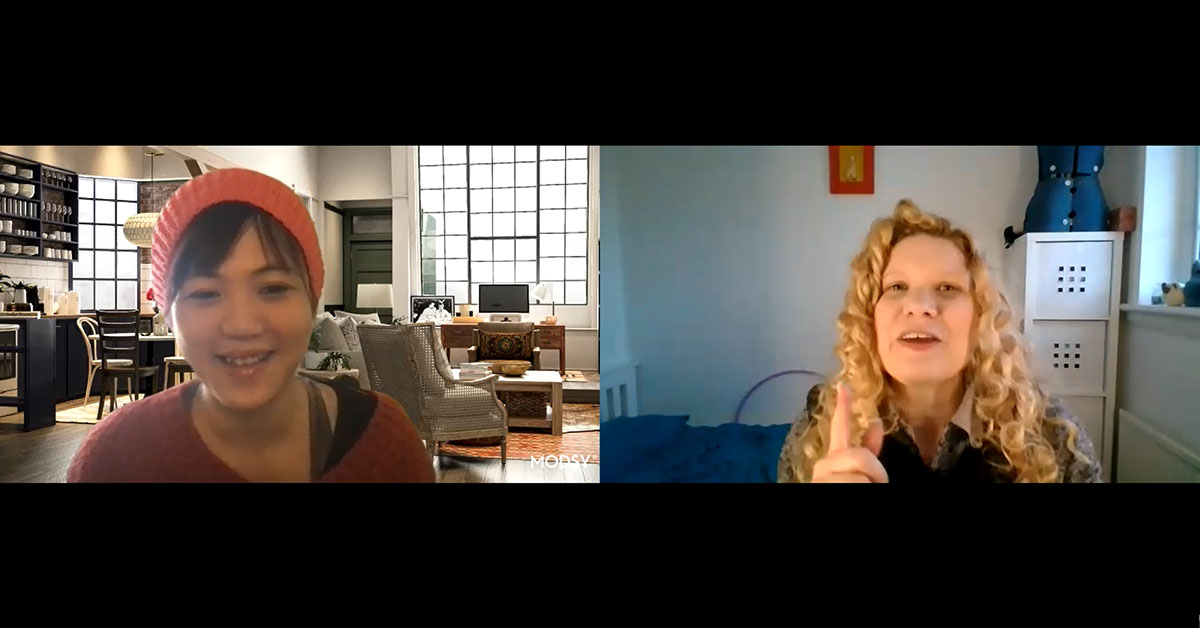
In the sixth of my expert interview series, I spoke to designer Mona King about web design. We spoke about the latest trends, keeping it simple, using images and video and why it is important to use experts where possible.
Mona is an experienced graphic designer and an expert in web design. She is fully qualified and has 12 years of experience. Watch the video to find out more or read the transcript below.
Mona’s links:
Transcript:
Samantha: Hi, it's Samantha Tonge again from Labrakita Marketing. This is another of my series of videos talking to experts within or connected to marketing. So today we're talking about web design with Mona King. Mona’s got eleven years of experience in the creative industry. And you've been running your own business for four years, is that right?
Mona: Yeah. Almost five years actually, because I started my own business in 2016.
Samantha: Oh, wow. That's brilliant. So do you want to just introduce yourself a little bit?
Mona: Okay, sure. I went to the University for the Creative Arts to study Graphic Communication. Afterwards I got 11- or 12-years’ experience in the UK design industry in total. Then I started my own business in 2016 and it’s been quite exciting.
Samantha: Yeah, I'd imagine there have been quite a few changes over those years.
Mona: Yeah. For instance, we didn't know that that thing would happen last year.
Samantha: Well, yeah, that in particular, has been probably the biggest change in our lifetimes. For anyone who's looking back at an old video: We're in the middle of a lockdown due to Coronavirus. So, Mona, to start off with, have you got any general design tips for an effective website?
Mona: Well, because we got limited time, I will give the audience five quick tips. First of all, simplicity is key. Do not be too worried and try to keep the website simple. Remember, less is more.
Samantha: Yeah.
Mona: Number two: You've got to use photos or images on your website to keep your entire audience interested, and to make your website more creative as well. Number three: the website needs to be mobile-friendly, because a lot of your target audience may not have a desktop. A lot of them might only use their mobile phones for browsing. Number four: You need to make sure your website covers GDPR. And finally number five: It's better to include some testimonials on your website, to tell people how you’ve helped your clients in real life. It’s up to you, whether you want to have a couple of testimonials or a full testimonial page. Let's see... of course there are many tips, but if you want to find out more, you will come and speak to me.
Samantha: Yeah, of course. It's funny, that my strapline is exactly what you are saying: making your complex simple. Often, less is more, especially if you're talking about a quite technical concept. You don't want to splurge all the information at a customer all at once. And like you say, it can become less engaging, if you've got a wall of text and not enough images to bring it to life.
Mona: Yeah.
Samantha: Yes, and responsive design is so important, isn't it? I operate in a B2B environment, so a lot of my customers, and my clients' customers are on a desktop, but even in this environment, a good 50% to 70% is actually browsing on the phone as well. Partly because a lot of them are on-site or not necessarily at their desks, and partly because a lot of people use their phone as another screen, if they're doing multiple things. So you sort of backed up my thinking on that one, which is good to hear.
And a lot of people, customers and clients come to me having previously done their own website with Wix, or GoDaddy, or whatever. So, what would you say about that? Why should customers go to a designer to get their website designed bespoke?
Mona: Well, platforms like Wix or Weebly, are great if you have a very limited budget, and you just want something to kickstart you. These companies allow you to design something really simple on your own, but the functions are quite limited. So if you want to achieve a certain style, a certain effect, or if you'd like a more bespoke design, those things are really hard to achieve on those platforms. That's why you need a designer. Furthermore, we are trying to do things a lot quicker than you. For instance, if you try to DIY a website, it may take you six months. You're not getting anywhere. But for a professional designer, it probably only takes about a couple of months or even a couple of weeks.
Samantha: Yeah, I imagine it depends on how complex the website is. And at the end of the day, the quicker you can get your website up, the quicker you can start earning money. And you're better off doing what you do best, to earn your money. So I think that's a good point as well. And the fact that it can be much more tailored to a brand.
Mona: Yeah.
Samantha: And really put across what the brand is. And at the end of day, you are the expert. You can come up with ideas that most of us, who haven't got a clue, probably wouldn't be able to, as well.
Mona: Yeah, of course.
Samantha: I really love the design of my website. I actually went and had it done bespoke before I even went to a web developer, to get the design absolutely spot on. And I really, really appreciate that. As Mona says, you might be on a budget, but I think if you can, I would recommend going to a designer. Which kind of brings me on to the next thing really. If someone's looking to set up their first website, or if they've already got their Wix-type site, and they're moving on to that next step, wanting that more bespoke website with better functionality. What's the best way to go about finding a good web designer? What sort of questions should they ask? How do they look for someone?
Mona: First of all, you need to look at their portfolio and, if you have time I would recommend having an in-depth conversation with the potential designer. I'm not judging anyone, but every designer has different styles, yeah? There's a different style and approach to things.
Samantha: And I guess you want... if you're talking about web design, you need to make sure that you pick someone who is familiar with web design specifically, rather than just print, as well. Because it's quite different, isn't it?
Mona: Yeah. I mean, because I do print stuff as well, I notice the differences, yeah.
Samantha: Yeah. Because I have met some designers who focus purely on web, but I know a lot of designers as well, who are very much print-focused, and they're very different, aren't they? Although, like you, there are those who do both really well.
Mona: Yeah, thanks so much. It only depends on what your needs are. Do your own research, look at portfolios and have a conversation with the designers before you make your decision. That's my advice here.
Samantha: And presumably, you want a designer who's got their qualifications and experience as well, rather than... because it's not protected, is it? Anyone can set themselves up and call themselves a graphic designer nowadays.
Mona: Yeah.
Samantha: They haven't actually necessarily done all the training.
Mona: Yeah. And another thing that I noticed is that quite a few people are starting their own web design services during the pandemic, because everything is online. Again, they may not have the skills and the experience themselves, so they have to subcontract everything. I'm not judging, there's nothing wrong with subcontracting, but it can be dragging on for quite a while. Because when you speak to that person, he or she may not have the skill or knowledge, so they then have to speak to their subcontractor and get that answer...
Samantha: Yeah.
Mona: and it can be quite frustrating sometimes.
Samantha: Yes. A lot of web developers aren't necessarily designers either, but they might give it a go. think there are some people that can do both, but they're very different skill sets, I'd say.
Mona: Yeah.
Samantha: Do you or did you build websites yourself? Or are you purely on the design side of things?
Mona: Well, I'd build a website myself, if the client asks and I mainly use a platform called WordPress. WordPress is a very powerful tool. There are loads of plugins and builders there, which allow designers to build and design the websites. But I would like to add, because a lot of times I need to collaborate with web developers myself, that it's like you mentioned, we got very different skill sets.
Samantha: Yes, yeah. That's funnily enough exactly how my website was done. I went with a designer, and then, I'm very lucky, my other half is a web developer, so I got him to actually make the site come alive.
Mona: Yeah.
Samantha: Good to hear that. And are there any sort of things people need to think about in terms of trends? Because I've been speaking to another graphic designer, more about the print side really, and graphic design in general in one of these interviews, and he was talking about the latest trends in terms of branding, etc. Are there any sort of trends to make a website look really fresh that people need to think about at the moment, if they're getting a new website now, in 2021? Just in case anyone's looking at this in 10-years' time, this might be out of date. But for now, what are the trends in 2021?
Mona: Well, I think the major trend of the future is definitely video. You can implement video backgrounds on your website, or you can simply add your own video selfie, or your company’s promotional video to the website.
Samantha: And do you recommend hosting that actually on the website itself? Because I know quite a few people who share it on social media, but haven't really thought about putting it on their website.
Mona: I think you can do both. Yeah.
Samantha: Yes.
Mona: It's better to do both. Yeah.
Samantha: Yeah, I completely agree with that. And it helps with the SEO as well, doesn't it?
Mona: It really does. With videos, you can put the keywords into the descriptions and the videos or images can all generate more content for the search engine or Google. So it all helps you to be found.
Samantha: Excellent. It's a really important factor to think about, I think, because there's no point in having an all-singing-dancing website, if no one can find it.
Mona: Yeah, of course. Yes.
Samantha: And do you have any more tips on that as well? We've talked a little bit about social media: Do you have any other tips about getting the links out there? Once you've got a website built, do you have any tips on how to be easily found on Google?
Mona: I'd say, to be found on Google, simply takes time.
Samantha: Yeah, true.
Mona: These things happen organically, just put your content on social media.
Samantha: Yeah, yes, I see. And I guess directories, and Google My Business and things like that as well. And that's also a really good point: don't expect to come out on top of the Google Search right away. I remember this first networking meeting I've gone to; my website gone live literally a half an hour before. I was giving out my business card and I’ve just told this guy that I was talking to, that my website, literally has just gone live. And he tried googling it and said: "I can't find it!" It went live half an hour earlier and Google hasn't found it yet. This was in July 2019, but then over time my website has gone up the ranks. But it doesn't happen overnight, does it? So, that's something to bear in mind. Design is really important, but it can’t work miracles, no one can.
Mona: No.
Samantha: Okay, so is there anything else people should think about in terms of how to brief a designer? How would you like to work with clients? Are there certain things people need to think about before they even speak to you?
Mona: Well, I like to say the simplest thing is to look at examples. For instance, if you need a website for your marketing agency, you should probably look at the website of another marketing agency, just so that you get an idea. And then I also have a questionnaire to fill out. That questionnaire can be a bit techie for amateurs. So if you are struggling to fill out that questionnaire on your own, I can help. I'll fill it in with you for 15 or 10 minutes. Just to go through things with you. Yeah.
Samantha: Right. Okay. So you've already got your own process to make sure that people are thinking about the right things.
Mona: Yeah. But if you don't really know what you are after, then I can do a very quick research on your industry and give you some suggestions.
Samantha: Yeah. Okay. I guess that brings us back a little bit to choosing a designer. You want a designer, who thinks about that. So if you're having that in-depth discussion, are they asking you questions as well as the other way around?
Mona: Yeah, of course. Yes.
Samantha: Yeah, yeah. Okay. Have you got any other general things that you'd like to say about web design, and what both marketers like me, and maybe other people who are just running their own business, will need to think about in general?
Mona: I have spoken to other people in the creative or marketing sectors recently, and my impression is that a lot of us are not doing as well as we expected, during the pandemic. I think it is understandable, I mean, when the economy's not great, companies usually cut the funding for design and marketing first. But everything's online now. So you need to be seen by your target audience online, because you are no longer in your local market. Potentially, you are in a national market, or in the global market. So we really need to think about how to improve and sharpen your online presence and branding, to attract your target audience online. Of course, I know it's a very tough time, but marketing and design is very important, especially now, because you need to be seen.
Samantha: Yeah, absolutely. And it always amazes me that companies do that, even the really big international brands. The first thing they do is cut marketing, and then wonder why it takes so much longer to get back, once the recession is over. And yet, research shows that the ones that invest in marketing...
Mona: Yeah.
Samantha: ...do a lot better, not just during a recession, but afterwards as well. They recover much more quickly. So yeah, I agree completely. And as you say, right now, because of the nature of the downturn, it's so important to make sure that you've got an online presence, and the technology to continue to be selling your products, your services, etc. It is really important to invest in online.
And it's pretty good timing that we're having this interview now, because, and hopefully this is still available, when you see this. The Scottish Government up here have launched a grant, a “Digital Boost Grant”, which most small to medium businesses qualify for. This grant allows them to invest in a new website for example, or a new digital strategy to really help them reach that market. So if you're in Scotland, and you're seeing this, this is January 2021. If it's still 2021, when you see this, you're probably still okay. Have a look at that, google the Scottish Government Digital Boost Grant and have a look into it. Because that will help you use the services of an expert such as Mona and get yourself that really good website and get that technology in place to continue selling. So yeah, good timing that you mentioned that Mona. I don't know if there's anything like that in England at the moment, but that's available in Scotland.
Mona: I don’t think anything like that is available here yet, but I will have a look, because it's too late for me to move to Scotland now.
Samantha: But if you've got any clients in Scotland, maybe that's a good selling point for you.
Mona: Yeah, I think it's a good idea. Yeah.
Samantha: Yeah, it's really good. I've got some clients taking advantage of that one. So that's really brilliant, some really great information there. And I don't know if you have anything that you want to show as examples or anything?
Mona: No, I'm fine.
Samantha: That's fine. I will put Mona's links in wherever I share this online, on my website, and on any social media where this goes out, I will put various details so you can have a look at her portfolio which may give you some ideas. Also, have a look at competitors, what they're doing, and what you could probably do better and speak to someone like Mona who has asked the right questions.
Mona: Yeah. Thanks, yeah.
Samantha: Brilliant. Thank you very much, Mona. And thank you, everyone, who's watching.
Mona: Thanks. See you at an event soon.
If you need any help with your marketing strategy, call me on 07791 521439 or email me at samantha@labrakita.co.uk
If you need help with your web design, contact Mona at contact@monaking.co.uk