
Marketing for B2B start-ups – keep the momentum going
20 January 2020
You launched successfully, and you now have some paying clients. What next? How do you keep the momentum going and make sure that you continue to get a steady stream of leads, and your brand name out there? It is cruicial to keep up with your marketing activities if your business is going to continue to grow and thrive.
This blog is the third in the Marketing for B2B start-up series. If you haven’t read them yet, have a look at my first two Marketing for B2B start-up blogs, “What do you need before you launch?” and “Launching your business.”
Is your marketing working?
The first thing you need to do is work out what has worked so far and what hasn’t. Go back and look at your objectives, are you on course to meet them? If not, why not? Look at the objectives for each activity – you will soon get an idea about which activities need more effort or need to be dropped. Bear in mind that most people (myself included) overestimate what they can achieve and how quickly work will start to come in. If you haven’t met your objectives, take a look back at them, and with a more experienced eye, have a think about how realistic they were and adjust if necessary.
By their nature, some activities are about increasing your brand awareness over the longer term (see short Vs. Long-term below). For example, to get an idea if your long-term activities are on track, look at how your network or followers are growing over time. Is it stagnant, steady, or exponential? In most cases, once you get to a certain stage, you should see exponential growth. For example, once you hit over 500 contacts on LinkedIn, you will notice that the time it takes to get to 600 contacts is considerably less than the time it took to get from 400 to 500 contacts.
Make sure that you monitor where your clients are coming from. A great way to do this is by using a CRM system. To begin with, the free version of Hubspot will do. Make sure that you put the source of each contact in there, then over time; you will see a pattern of which activities lead to direct work. This could be which networking event you met them at; it could be which LinkedIn post they responded to etc.
Consistency
It can be hard to maintain consistency when you also have work to do for clients, but it is so important. Whatever activities you do, keep doing them! It is unlikely that any individual marketing activity will result in a sale. Most new customers will come along as a result of multiple points of contact, and only your most ardent fans will see everything that you do. You need to get your message out there again and again to gain traction.
Whichever tactics you have decided to use, keep doing them, keep up with your social media posts, keep up with that monthly blog, keep getting those press releases out, keep on networking! The more you do it, the easier it will become, and the less time it will take up until eventually, you reach a point where you are so busy with clients, you will need some help.
Short Vs. Long-term
As mentioned above, when thinking about what marketing is working, you should also think about whether it is a long-term or short-term activity. Now that you are more established, you should make sure that you have objectives for both, and activities to make them happen.
The latest research shows that in B2B (Business to business) 50/50 short/long term approach works best. In B2C (Business to Consumer) it is more skewed towards brand awareness
Your short-term objectives are likely to be about generating and nurturing leads. Immediate business, in other words. These will be achieved through activities using offers or campaigns about specific products and services.
Your long-term objectives are about over-all brand building because if people already know who you are when you approach them, they are more likely to do business with you. You will achieve these through activities such as advertising, PR, blogging, and much of your social media activity.
Networking straddles both. You are likely to get many leads in the short-term, but you will also be building long-term relationships and trust.
Saving time on your marketing activities
If you are at the point where you are spending so much time on your clients you are struggling to keep up with your marketing activities, you are also likely to be in a position to invest more money on your marketing.
There are many automation tools out there that can make your life easier, from tools to schedule social media posts to full marketing automation tools. Wherever possible, automate your marketing activities!
Your budget may not have allowed for outsourcing up to this point. However, marketing professionals can carry out marketing activities much more quickly and efficiently than you, so that you can focus on what you do best – billable hours! Whether you can afford to get someone to look after all of your marketing or just someone to write your blogs - every little helps.
This also applies to anything else you can automate or outsource. Whether it’s your accounts, IT, answering the telephone, etc., the more time you can free up for the day job, the better.
Keep your network growing
You need to keep growing your audience and your network, whether that is online or in person. You need the support, the advice, suppliers, and of course, potential clients and advocates. As a B2B business, you probably have a LinkedIn network. Keep adding to it. Every time you meet someone new, send a connection request. Every time a new person comments on a post, send them a connection request. Every time someone looks at your profile, send them a connection request. Also, use it to identify potential contacts within your target market (it doesn’t matter if they won’t buy from you, they will have other connections in the same area). Make sure you always connect with a message (this option is hidden on the mobile app, rather than clicking on “connect” on a profile, click the “more” button and select “personalize invite.”
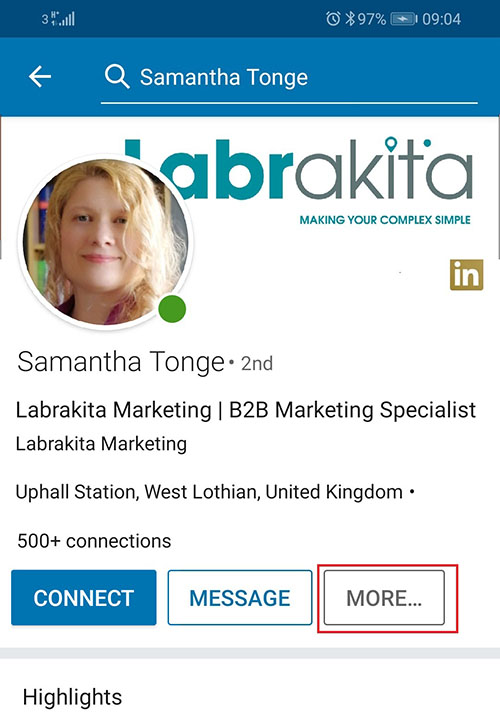
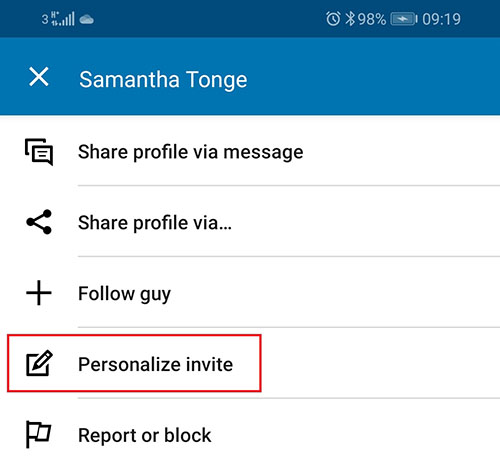
Facebook is also a great place to connect with fellow start-ups and microbusinesses. There are many business community groups there, and micro-businesses tend to use Facebook for business as well as pleasure. If you don’t want to bombard your friends with business stuff and you don’t want your business connections to see your political views or what you do in your free time, set up a separate business profile. Treat it like your LinkedIn profile. Have all your business info there, your qualifications, your past work experience, and explain who you are in the bio. Make sure all of this information is open for all to see. People are far more likely to connect if they have some idea who you are (still keep private information such as your date of birth locked down!)
Keep networking in the real world too. If your online connections are local, why not meet up for a coffee? Keep getting out to networking events and building relationships with fellow business people (and keep on following up and meeting outside of those events).
Also, use your network to increase your visibility. Ask for speaker spots at events to demonstrate your credibility, share your blogs with your network, and ask them to comment. Ask for referrals and introductions to people they know in your target audience.
Don’t forget your website
Don’t think that once your site is up, you can just forget about it. Make sure you keep it up to date and add to it regularly. Google doesn’t like static websites. I’ve already mentioned consistency if you have a blog – blogs are a great way to make sure that Google is always finding something new on your website. Once work starts coming through, it is easy to get behind (I have done this myself), but you ought to get at least one blog out per month as an absolute minimum. If you cannot keep up, find a copywriter who can do it for you. Make sure that you update your sitemap each time you add a blog (or any other page) to help Google find it.
Also, now that you have some clients, ask them to give you reviews and testimonials on Google & LinkedIn, etc. People are more likely to look at your website if they can see that you have positive reviews. Promote everyone you get on social media to gain credibility, and once you have a few, add them to your website.
Keep monitoring Google analytics. If you are not getting the number of visitors you were hoping for, or you’re not being found for the right search terms, speak to an SEO expert.
If you haven’t already, check out my first two Marketing for B2B start-up blogs, “What do you need before you launch?” and “Launching your business.”
If you need any more help with marketing your start-up, call me on 07791 521439 or email me at samantha@labrakita.co.uk.