
Interview with Ruby Sweeney: marketing events
28 April 2021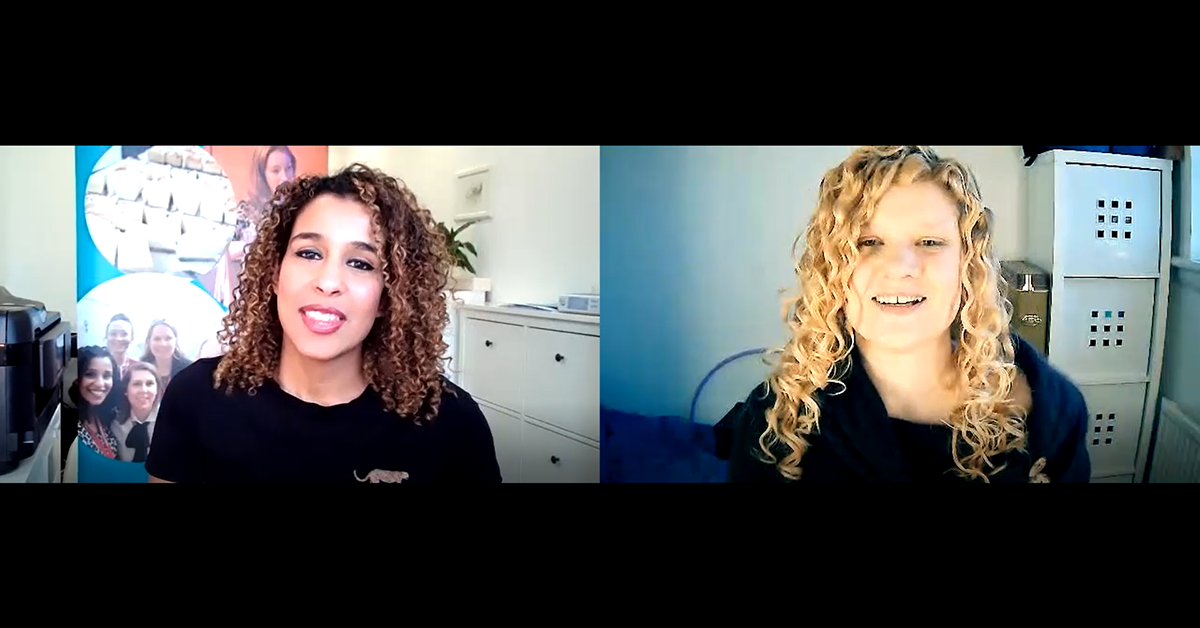
In the fourth of my video interviews with experts, I spoke to events expert Ruby Sweeney of The Events Hub. We spoke about the things to think about when organising a marketing event, how to make the most of it and what pitfalls to avoid.
This is the fourth in my series of interviews with experts in specific fields of marketing and fields related to marketing. If you missed them, also check out my interviews with Steve Ponton on LinkedIn, Stuart Aitken on graphic design, and Barry Clark on sale & marketing.
Ruby’s links:
Transcript:
Samantha: My name is Samantha Tonge from Labrakita Marketing. Today’s interview is with Ruby Sweeney from The Events Hub. This is the fourth interview in my series with experts either in marketing specialist fields or fields that are closely-related to marketing.
Today’s topic revolves around marketing events. Ruby is an events expert, and has been organizing events for a very long time, it's her day job. So over to Ruby, just to explain a little bit about yourself and The Events Hub.
Ruby: Sure. Thanks, Samantha. So the Events Hub primarily exists to help clients to plan, produce and promote their events, and conferences. We've been in existence for about nine years. And the biggest things that we help our clients with, is giving them clarity when it comes to planning events or hosting them, putting them on, working with Teams. We also help them to save a lot of time and stress, by keeping their teams focused on their day job as opposed to being away from their desk and their role for a couple of months, to sort out a big event, or a conference, or a showcase. So it's an interesting place to be at the moment because of the timing and where we are.
Very importantly, we have lots of expertise within the team. We come from various backgrounds: the hospitality industry, the arts, conferencing, and from both public and private sector. So within my team, we've all got, what we would call, a 360-view of events. We've worked in venues, in agencies, and also on the client side of things. It's great that we've had that sort of view of events and the experience of working in all those different areas. This way, we understand the pain points that our clients are going through, or we might understand it more from a venues perspective, or we're trying to explain things to clients when it comes to planning or hosting, etc. So the business has been going for nine years. Nine, nine and a half years actually. And I've been in events for about eighteen/nineteen years. I started off in hospitality and then sort of refined that and went down the events route. So we all live and breathe it. We've lived and breathed events for a very long time, the team and I.
And now that we are, where we are. And we're working in virtual events, my team has been extended into the technical and production side of things, which we can talk about later. We've got a technical partner now, who have been live streaming events since 2009, so it's not a new thing for them. And our partnership means that we can still offer the really good events expertise that we've built up over the years, as well as that sort of technical production piece, that's really crucial for events these days.
Samantha: Brilliant. Thank you. So, just to explain to the audience, if you're reading this some time after this has been recorded, we are in the middle of a pandemic at the moment. So, pretty much every event is well…. all events, certainly in this country, are online at the moment. So there have been quite a few changes. Although, like you say, we have had virtual events for a long time. But there's a lot more that's gone online during the pandemic.
I'm guessing there’s a lot more technology, that's come about over the last few years. So if we wanted to give advice to our marketers out there, or to people who run their own business, doing their own marketing, and want to run a marketing event to their clients, or potential clients, what sort of technology do you think they should be thinking about? Obviously, we've got Zoom, this interview is being recorded on Zoom and I think most of us are familiar with that. But I'm sure there's a lot more out there, that we should be thinking about.
Ruby: There is. And it's interesting, because back in the summer of 2020, when I was looking at virtual platforms, and where virtual platforms fit with production, or where production fits with platforms and then where event management came in. Interestingly, those are the three key areas that we as a business and as a service are focusing on now: event management, technical production and virtual platforms. So that's very much the starting point, when you begin to plan a virtual event, those are the three key areas, and also the areas that we focus on, and that we cover under one roof when we plan our clients' events.
So that aside, when it comes to kind of looking at platforms and technology. Last summer, I was thinking about a not over-the-top but an all-singing, all-dancing platform. I was thinking: “Right, this whole thing has completely revolutionised how we attend events, how we run and host them and how we get involved in them. So we kind of need a platform that can do all this wonderful stuff.”
But actually, what I then realized going into the autumn and the winter was that people were coming to me and asking for advice and asking for proposals and: “how can we do this?”, or “how can we structure this?” But actually, it was fairly overwhelming because there was so much chaos going on in the world. Very few people were committing at that point, because nobody knew what the outlook was. And nobody knew what the autumn will look like, let alone the winter and things like that. So when it came to planning, people were planning on very short cycles, and also it was a case of: “Actually, that sounds really overwhelming, I'm just getting used to Zoom, I'm just getting used to Teams”. So it was quite interesting to see the way that evolved.
And what I realised towards the end of last year was that a lot of people just want to take those baby steps, especially if they're going into it for the first time. And I'm all for just using Zoom or Teams, if the event calls for something as straightforward as that. Especially, if a client is doing their first virtual event, or if it’s an internal event; it doesn't need to be very big. Unless, you know that the stakes are high, for example an external event, or when you’ve got paid delegates which then requires putting on a bigger production.
So what's been really interesting is that sort of keeping it simple, so as not to overwhelm people. But at the same time, we're kind of at this crossroads where people are going, kind of a bit bored of Zoom, and the "same old thing". Because they are on it, doing meetings all day, and then they go into an event in Zoom, and it's all very samey. What is probably more important, and this is my take on it, that it's very much about how a client uses a platform as well. The biggest bit of advice I give is get your platform to fit your event, don't try and get your event to fit the platform because you lose the ethos of what the event is about or the structure or something that your attendees would generally find familiar about that event. So there's got to be a familiarity about that event to a certain degree, if it's a transition from something that was live.
It's quite interesting, there are really easy to use platforms out there, a lot of the new platforms now are browser-based as opposed to apps, so you get a link to an event, and then it will just pop up in Google Chrome or something. And you would just go in fairly self-explanatory and away you go, and a lot of the platforms are going down that route now. And I'm also finding that a lot of the platforms are getting easier to navigate, because I think it is just that they want to save people from being overwhelmed.
I think designing an event for the virtual platform is really key, and not trying to get the event to fit the platform is another really important thing. Finally, don't forget about the people on the other side of that screen, because as organisers, we get very focused on what we want to deliver, but actually, we need to think about what it is, that the other person on the other side of that screen wants from this event. And that person behind that screen might be an attendee, a sponsor, or even a speaker, and there's got to be a sort of a journey for each of those people. A journey through the marketing campaigns, through the touch points and the columns and everything else that make them feel part of something that's really useful, really valuable, and something that's going to be memorable. That's my take on it.
Samantha: So from the users' point of view, by the sound of it, they should see as little difference as possible between the virtual version of the event and what it would have been or what it usually is face-to-face?
Ruby: Well, it depends what it is. But what I'm saying is that, if an event for example, is for a membership organisation, and someone has been part of that organisation, let's say Chamber for example. If they’ve been in that Chamber, and they used to go to that particular event when The Chamber had it as a live event, and then they've come into it in the virtual space, there's got to be something that's familiar. And it is not necessarily the structure or the format, because I think this whole digital disruption thing has thrown things completely wide open for us. So I think, we've got to be creative and adventurous. But I also think that somehow through that linkage between the live event and the virtual event, some sort of familiarity would be great. Whether it's something simple, like branding, or it's the host of the event, or it's something else. In particular, I am thinking of events, where there is a sort of connection, whether it's an online community, or an offline one, it becomes very much like a membership.
What I'm saying is that it shouldn't be a live event just picked up and put into a platform. It's got to be thought about, we've got to be creative, and we've got to be clear on the objectives. And that's usually where we start with our planning process: “What are you trying to do here?” And again, that's even more important in the virtual because there's so much competition now. And there's so much noise and demand on our time from others, offering very similar events or offering networking or whatever it is. And we don't have to travel, we don't have to think about how we're going to get there. So actually, there's a lot of things vying for people's attention. Therefore, we've got to really think about the planning and how we make something, you know… how we format it, and how we evoke that sense of being part of something. If that makes sense.
Samantha: Yeah, it does make sense. At some point, we're going to be back face-to-face. Do you see virtual events continuing? And having a lot more online events, as opposed to the number of online events we had pre-COVID?
Ruby: Yes, I think so. Well, I'm certain actually, because when we look at how we are working right now, how we are networking, how we're accessing events, their contents. It’s interactions, it's networking, and it's education, or whatever it is that an event provides. Those barriers to entry are down. So what we have kind of got used to, is this way of just going out of a meeting and into an event, you know. Out of that event, over, go grab some lunch, and then back in, and then the next thing, the next task or whatever. So what I genuinely believe has happened is that we've all become really accustomed to this way of working.
Now, I know for certain that a huge amount of my networking, for sure, and networking is just a small part of events. A lot of people would argue that networking events is just a small part of networking. Networking is a big thing, and brings in things like social media, and all the other stuff that we all know about. And there are people in our networks who talk about this, far better than I do, but what I'm saying is that if I just take the example of a networking event, I get what I need for my networking events online. No stress, no traffic, no, you know… worrying that I'm going to miss the school run or something on the way back. None of that is happening for me.
So, I definitely think that we are going to pick and choose where we'll spend our face-to-face events time. And that could be a social event every couple of months for one of our networking groups, or that could be a showcase or a business exhibition that you certainly want to attend in person because of X reason. But at the same time, another event from the same organizer in a different part of the year or with a different agenda could be perfectly suitable to attend virtually. And so I think we'll all have this sort of hybrid way of attending, I think everything: meetings, working, offices, events. It's all kind of becoming this blended approach training. I mean, what this situation has done for virtual training is phenomenal. So I think a lot of people will be focusing on how they work, what they get from those interactions, and how streamlined their days are.
And then also, for me, it's really useful to see the bigger reach in terms of numbers when it comes to virtual events, and the bigger reach globally. We sit here and we talk to people in the States, and Europe, Asia, and Africa. It's just phenomenal. We're planning events that are across time zones at the moment, and I've got a big conference next week where we are literally global. And it's really exciting because we are doing something completely incredible. When you think about how the technology allows us to facilitate that, while we've still got the high level of interactions, and we've still got that kind of community feel, because that event has that reputation of being a community event. It's highly interactive, it's got this fantastic reputation.
So all that sort of stuff, I think, package that all together. And if we look at our diaries, or our calendars, we look at the events and the interactions that we have. There are a lot of things where going virtual is either on par, or better than face-to-face. We'll go: “Actually for that particular one I want to be face-to-face for these reasons”. And so we are justifying then why we would go to a live event.
On the flip side of that, for people like me, who are organizing those events, we also need to think about added value when we're running a live event or an added value when we're running a virtual event, depending on how we want to shoehorn people. But we don't want to shoehorn people, we want to give people choices. So that's also really interesting. I mean, there's a heck of a lot that we have to plan and preempt, and we have to have contingencies, because should that hybrid event or that live event suddenly need to become a virtual event, we've got to have things in place. There's lots to think about, but I think this process has helped us weed out the events that weren't that particularly effective. So it's been an interesting process for me anyway, and for my clients, and the way we look at how we plan and work on our events.
Samantha: Okay. Within that you mentioned conferences. And I guess this is something that very much struggles on- and offline, and by the sounds of it, moving forward, it could be on- or offline. One of the things that often falls to marketers, or to business owners who are looking after their marketing is getting speaker spots for conferences. Do you have any tips or things that people need to think about if they're looking to try and get speaker spots? And what they should be thinking about when it comes to the speaking itself?
Ruby: So is that in terms of recruiting speakers? Or is that in terms of someone who wants to be a speaker at someone else's?
Samantha: Someone who wants to be a speaker, yeah.
Ruby: Okay. I mean, it depends. Because if they're experienced in speaking live, then they've kind of got that behind them, and they've got that portfolio, and they've got that experience. I am not saying that it's exactly the same, as when you speak in a virtual event though. It's interesting because we've seen speakers from both sides, kind of do better or worse, which is completely normal.
So I think if someone wants to be a speaker at other people's events, I would try and understand what the ethos of the conferences are. What's really interesting is to try and understand: “Is that a conference for internal stakeholders? Is it for staff? Or is it for a Board? Or is it for external attendees? Or is it something that's going to be marketed? Or is it closed or is exclusive or is "invite only"?”. So there's lots of things, I think that that can come into it. So try and really understand what that event is about first, and what it's trying to do, and then how their expertise fits into that event, and how they would be an ideal speaker for that.
There are lots of different ways for the speakers to get involved with events, whether it's a straightforward sort of presentation, or a keynote, or whether it's being on a panel, or a discussion or a fireside chat, which I've seen evolve over the last couple of months. I've seen it become more of a natural kind of conversation, like you and I are having, which is less structured. And I think that's nice, because it sort of just flows, and it's quite organic. But at the same time, for this sort of scenario it is fine. But actually, if it's something else, something that has to be very much on point, then they need to understand that it's a structured flow. So there's really that understanding of what the expectations are, and where they need to take that presentation or that keynote, or, you know, however they get involved.
But the other thing is that I'm getting to a point where I'm enjoying the... you know, the Q&A-style, the discussion, the more interactive-style sessions, as opposed to being spoken to by someone for quite some time. Because that is... unless they're very captivating, and very experienced, it can be quite difficult to keep on track and not get distracted.
So what I would suggest is that they understand what the event is about, who the audience is, and then what's expected from a speaker. And then perhaps putting forward a portfolio and demonstrating what they've done and how they've done it, and so on and so forth. And then from there taking the conversation on with those particular conferences that they've identified and seeing how best they could work together with the hosts. So it's just kind of scoping out, having a chat, having a discussion, and really trying to understand what the ethos of those events are about, because different events will need different skill sets and different styles as well. So it's a real kind of fine line.
But I think this whole situation has shown us that we've got to ask questions, we've got to dig deeper, we've got to be clear about objectives. We've got to be open, we've got to be flexible. I mean, I'm learning so much about human nature through this process. And I don't know, I guess you are as well. And just trying to sort of figure things out: figure ideas out, or figure people out. And it's a really interesting sort of process. I think it's an interesting time that we're living through.
Samantha: Hmm, yes, yes, definitely. And, yeah, it's really interesting how things have been moving. Most of the people that are watching this, who don't have a speaker portfolio yet or if they do, it might be the odd thing they've done at the occasional networking meeting. I suppose, the last thing you want is a speaker who turns up and then just does a sales pitch, which I think we've all seen. So from your point of view, especially the conferences we're talking about, it really does need to be something educational and passing on knowledge? It is about demonstrating credibility, not buy my product, buy my service, right?
Ruby: Absolutely, yeah. We do put out a disclaimer with all of our conferences, particularly where there is a commercial speaker or sponsor to say that this is absolutely not a sales pitch. This is about imparting your knowledge and sharing something. It is definitely not about the company, it is definitely not a sales pitch.
And what's really good, and we do this for a couple of clients is that we take the speakers through this sort of speaker journey. We brief them and we tell them exactly what the expectations are, who the audience is, what the other segments might be, just so that they can tweak what they've got. And this way, we can be absolutely certain, that that session is not going to be a full-blown sales pitch.
There are also things like: we need presentation slides a week or two before a virtual event. It's not just turning up to an event with a USB stick. It's so different. So, when we get things like that, we've got a sense of what we're going to cover and what we're going to talk about. So we can definitely keep that in check.
But it's all in the briefing and in the communications. And a big part of events I've learned over the last sort of 19 odd years is that: it's all about communication. It's all about letting people know where things are at, moving things forward, and just keeping that communication going both ways. And that's worked well for me so far.
Samantha: Excellent. And, yeah, hopefully, there will be face-to-face events in the not too horribly distant future. And we will be back doing things like trade shows. So if someone's thinking about exhibiting at a trade show, do you have any advice or things they need to think about: what they want to show, how they go about it, etc.?
Ruby: Yes. When exhibiting at a trade show, it's very important, especially if it's one of these big, national conference centres, star trade shows, and even if it isn't, if it's something smaller, it's local, or it's sector-based: always suss out that event, always ask for the stats from previous events. A good exhibition or trade show organiser will have those stats, and will share them with you. Suss out what's been done before: numbers and delegate profiles and visitors and all the rest of it. So that you really understand whether that event is worth the investment in the first place.
And another thing I would suggest is that go and attend one of those shows as an attendee first. Particularly for one of these big national ones, because they are thousands and thousands, upon thousands, just for floor space, and then you've got staffing and stand build, and all the equipment and everything else. So it's really important to suss out what it is you're letting yourself in for, especially when you're parting with a lot of money. So that'd be my top tip: go and suss it out, go and get some stats and some details from the organisers and just figure out, if that's exactly the right show for you at the right time in your business.
And then the other thing would be... I mean, hopefully, we're talking in the context of a live trade show. Then it's about mapping out exactly why you're there. Again, very much strategy, go back to objectives: Why? Why are we going to this? Who is going to be involved in this? And why are we taking those people away from their day jobs to be on this stand for however many days or hours?
And then really working out a process for how the interactions will work, which also helps to shape what's on that stand, what interactions might be, you know. You might have some hands-on stuff, you might have samples, you might have giveaways, but they've all got to tie in together. We can't have all these disjointed activities going on on the stand. They have got to be part of this bigger strategy, kind of leading on to the next stage of that journey. And then you know, you've got follow up and the rest of it so, it's got to be cohesive. And there's got to be... You're not just giving away giveaways for the fun of it. There's got to be a real understanding and also a budget. You really have to nail down a budget, because it's easy to get carried away with these shows. And if you go a bit mad with the budget, are you then still going to get the return on investment? So nail down a budget and be really strict with yourself about how much you're going to spend, and how much you are willing to spend on that event, and staffing comes into that again as well. So I would definitely do that.
And then the big, big key, and I have seen so many companies fail at this big time, is the follow up. Once that event is over, that show is over, you have to follow up. And honestly, I've been to shows, and I'm not going to name and shame, but I've been to shows, where the shows have been great, but individual exhibition stand holders failed. I've said to some of them: “I love your products. I would love to have a demo or I'd love to have a chat after this demo to understand”, or whatever. And they've never followed up with me! And I think: “What a massive loss.” And that's from software to promotional materials. It can be any business who just hasn't followed up. And I think, what a loss, because that could have led to really great things for me, as part of my business growth or just my personal growth, or for them. It was business. I mean, why you're at a trade show if you're not following up. So the key part is 100%, that follow up after an event and how you then put those people into your process and into your marketing process. Yeah, it's just astonishing, how many people don't follow up properly.
Samantha: It is horrifying, especially, as you say, at the big shows where some of them have spent 100,000 pounds or so.
Ruby: Yeah, yeah.
Samantha: And then there's no follow up. I mean, funnily enough, another one of these videos, as I mentioned, it's a series, so have a look at the other videos. One of the interviews I had with Barry Clark, who we both know. He's an expert in sales, and this very subject came up. Follow up after trade shows. It is so important. And if you can, if you're a larger company, you should have your marketing guys there.
Ruby: Oh, absolutely. Absolutely.
Samantha: Make sure that follow up is nice and easy. You've got to have the process designed before you turn up. So that it actually happens.
Ruby: Yeah.
Samantha: And I mentioned in that interview as well, that I was working for one company for about 10 years. And when I started, there was one trade show in the first year that my company attended. And they came back to one guy, who then had a bit of a breakdown, when he saw a pile, this high, of leads from this show that had happened two weeks previously.
Ruby: Oh.
Samantha: Then he was expected to put it on the CRM, and then the sales guys would, eventually, get around to following up, at which point the lead has gone dead cold.
Ruby: Of course they do. Of course. That's another top tip from events, particularly. This can be networking, trade shows, this is every event that you interact with. You must follow up. ASAP.
Samantha: Yeah.
Ruby: I've been to shows, where people have followed up with me immediately, even whilst I'm still working on the show. And I think that's brilliant, because they've got the process nail on. They know exactly what they're doing. Because, you know, strike it while it's hot. So many people will just leave it and leave it and leave it. And I think you're right, that process has got to be right. As soon as that business card is dropped, or that conversation is had, or that form is filled, or that QR code or barcode is scanned from that badge; this is our process.
And you're absolutely right, you've got to get marketing involved. And even if it means to get someone like a VA, or just bring in some additional resource, and just give them that task, that will validate that attendance, because otherwise, what's the point of you being there. And this is just… yeah, it's just so common, it's frighteningly common.
Samantha: And even simple things like, you can't read the sales guy's handwriting. But if he's there, he has just had that conversation, he'll still remember what it was about.
Ruby: Absolutely.
Samantha: Put it in, if you've got an iPad, just have one person with an iPad there, who puts it into the system. Get your automation sorted out, so that that person automatically gets an email with any literature that they've requested, and a message saying that we'll be following up with you. Then you've got that process nailed.
Ruby: Absolutely. It's not difficult and it's not expensive. You can get apps for iPads like you say, Samantha and also lead gen apps for whilst you're on stand at a show to just record someone's stuff, and off it goes. And you can build your landing pages, you can build your process around it, but what I would say is: if someone isn't going to be bothered to build that follow-up process, then they shouldn't be at the event at all. It's only for vanity otherwise, it's not for any particular objective. And I think it's a waste of time, and it's a waste of money.
Samantha: And even if you're a smaller company, even if you're a one-man-band, you can make sure that you've got your tablet or your phone or whatever, just make sure that you do that follow up. You've probably got time, if it's a smaller show, and you're a smaller business to have that same process. It's really important, even if it's more manual.
Ruby: Absolutely. We've had that with some of our virtual exhibitions. And again, I want to talk about just Chamber as an example, the virtual exhibition was last year, and people are still having conversations, having met at that virtual exhibition about six months ago.
Samantha: Yeah.
Ruby: There was that follow up process or there was that sort of song and dance around the exhibition and they've gone:
“-Oh, yeah you were at that show.”
“-Yes, I was. Yeah.”
“-Okay. Let's go and have a...”,
you know, and so, it's really interesting that even for a small business, getting involved is not difficult, so long as you've got a process sorted. And it doesn't need to be expensive, and it just means that you're giving this kind of professional image of what you are and what you do. So I think, whether it's virtual or whether it's live, that process has got to be absolutely nailed down, because you're going to be remembered for that, months on. Absolutely.
Samantha: Right, yeah. Yeah, absolutely. Okay, so are there any other general comments that you have, things we need to think about, if we're organising a marketing event of some sort?
Ruby: My biggest tip, and I tire of hearing myself say this actually, is strategy, strategy, strategy. Have a plan and know what your objectives are, because if you don't have either of those, and you're not measuring them at the end, then there's just kind of no point.
I mean, I know, I'm being very blunt, but we've got to a point where people are going to be looking at potentially a hybrid events calendar, maybe in a few months or a few years down the line. This means: some virtual events, some physical events, some hybrid events. There's going to be that whole, sort of moving parts of events calendar, so it's not necessarily that straightforward But we are really having to think about what we're doing and where we're doing it and how we're doing it and how we structure it. And, again, marketing follow ups and all the rest of it. But the biggest thing is the strategy piece, because, if that's not there, holding everything together, and there's no process to measure or follow up, then it almost invalidates the whole thing.
So I'd really suggest that an event, especially for smaller businesses, is meant to be a part of your main calendar. It's not just something out on the periphery of something else that you're doing. It's a key and core activity. And it needs to sit with marketing and needs to sit with client retention, it needs to sit with lead gen, and all these sorts of things. So that's why I'm so massively vocal about events, because I think people need to understand that they aren't stand-alone.
And that also means, when it comes to things like budgets, for example, you're not just looking at an event budget, you're looking at some of marketing, you're looking at lead gen, you're looking at, you know, all these other things. So it's really important. And I really want to educate people about this. You need to think about the plan, think about the strategy, build the event into your overall event, and kind of share that business strategy, share that marketing strategy with your event organiser, or whoever in your organisation looks after events. And also, whether it's a board or anything else, it's really important to communicate that and to get everybody's input, because then that's how people are going to bring more creative ideas to the table and create something really cool. So yeah. My advice is: strategy, strategy, strategy.
Samantha: Funnily enough, that's one of my own pieces of advice in marketing, in general: make sure that you know why you're doing what you're doing. And, we talk about marketing events here, so everything related to marketing needs to be in your marketing plan for the year. And then you need to have an individual plan for each piece of marketing you're doing, whether that's a campaign for an event, or it's the event itself, or it's, you know, your website. Whatever it is, you need to make sure that you know what your objectives are, you've got a strategy. So, above anything else, you need to know, whether you've achieved your objectives, or not. Otherwise, you won’t know whether to do it next year again, if you don’t have any objectives.
Ruby: Yeah, absolutely. You got to have objectives. And no, you definitely won’t know without measuring those objectives. And also, how do we learn from that? How do we repeat, if we haven't had objectives to work towards? So, it's so important to just think about those things.
And again, tie up events, marketing, sales, and all these other parts of the business. They don't necessarily have to be separate. They sort of overlap, particularly in a small business, when a small business owner like you and I is doing all these different things, all those activities. It all kind of becomes one. So it's very hard then to separate them.
And that's how we work with our clients. We want to work with them, trying to help them to move their business forward and have those events as part of their growth and then that helps us grow as an organisation and as a team as well. So happy days.
Samantha: Okay, brilliant. Thank you so much for that. And this is really useful information there. As a reminder for people who are reading this: This is a part of a series. Check out all the other videos, they contain all sorts of information related to or part of marketing and they will really help you with your overall marketing strategy, I hope. So thanks very much for everyone for viewing/reading and thank you so much Ruby for being my interviewee today.
Ruby: Thanks, Samantha.
Samantha: Alright. Bye, everyone.
If you need any help with your marketing events, contact me on 07791 521439 or samantha@labrakita.co.uk or contact Ruby on 01506 300277 or ruby@theeventshub.com